

You put on your whitening strips, close your mouth, and suddenly your mouth seems to discover saliva as a full-time hobby. There’s bubbling. Maybe some foam. Now you’re wondering: does saliva ruin teeth whitening strips?
Usually, no. Normal saliva while using whitening strips is expected, and a little foaming doesn’t mean the whitening gel has clocked out. You can swallow your saliva normally, and yes, you can close your mouth. The bigger issue is excess liquid at application or gel pooling that makes a strip slide, lift, or lose even contact with your teeth.
Here at SNOW, we’d rather save the panic for things that actually deserve it. So this guide separates normal mouth behavior from the moisture that can interfere with strip placement, then shows you how saliva production, foaming, swallowing, and fit can affect your whitening process.
Start Your Strip-Based Whitening Routine
Key Takeaways
-
Normal saliva is expected, and your mouth does not need to stay dry for the entire whitening treatment.
-
Light bubbling or foam can happen with peroxide-based whitening strips and does not automatically mean the strips stopped working.
-
You can swallow saliva normally during directed use. Do not intentionally swallow whitening gel or the strips themselves.
-
Closing your mouth is fine and can make it easier to leave the strips alone while the whitening gel works.
-
Very wet teeth at application, pooled gel, or strips that repeatedly slide can create uneven whitening by interrupting contact.
Foaming, Saliva, and Swallowing: What’s Normal?
Whitening strips live in your mouth. Saliva was always going to be invited. The useful question is whether what you’re seeing is normal moisture or enough liquid to disturb the strip. Foam, swallowing, and a suddenly overachieving mouth can all look suspicious, so let’s separate them.
|
What you notice |
Usually means |
What to do |
|---|---|---|
|
A little saliva |
Normal saliva production |
Leave the strip in place and follow directions |
|
Light bubbling or foam |
A normal reaction in a moist mouth |
No need to restart just because you see foam |
|
You need to swallow |
Normal during wear |
Swallow normally rather than holding saliva in your mouth |
|
Strip stays flat |
Contact is staying consistent |
Keep wearing it as directed |
|
Gel pools or an edge keeps lifting |
Excess saliva may be affecting placement |
Gently correct placement; do not add extra gel |
|
Strip repeatedly slides |
Initial grip may be poor |
Focus on drier application next time |
Is It Normal for Whitening Strips to Foam?
Yes, some foaming or bubbling can be normal with teeth whitening strips, especially when a peroxide-based whitening gel meets saliva. Your mouth is moist, the strip contains active whitening ingredients, and the two are sharing a very small space. A little drama was inevitable.
Peroxide-based whitening agents such as hydrogen peroxide work by breaking down stain-causing compounds. Temporary tooth sensitivity and gum irritation can also happen during peroxide-based teeth whitening, especially when whitening products are overused or worn longer than directed.
Foam by itself is not a useful scorecard for whitening effectiveness. Don’t add more gel, extend the wear time, or restart the session just because your strips look bubblier than expected. Follow the product directions and pay more attention to fit than foam.
Is It Okay if Saliva Gets in Whitening Strips?
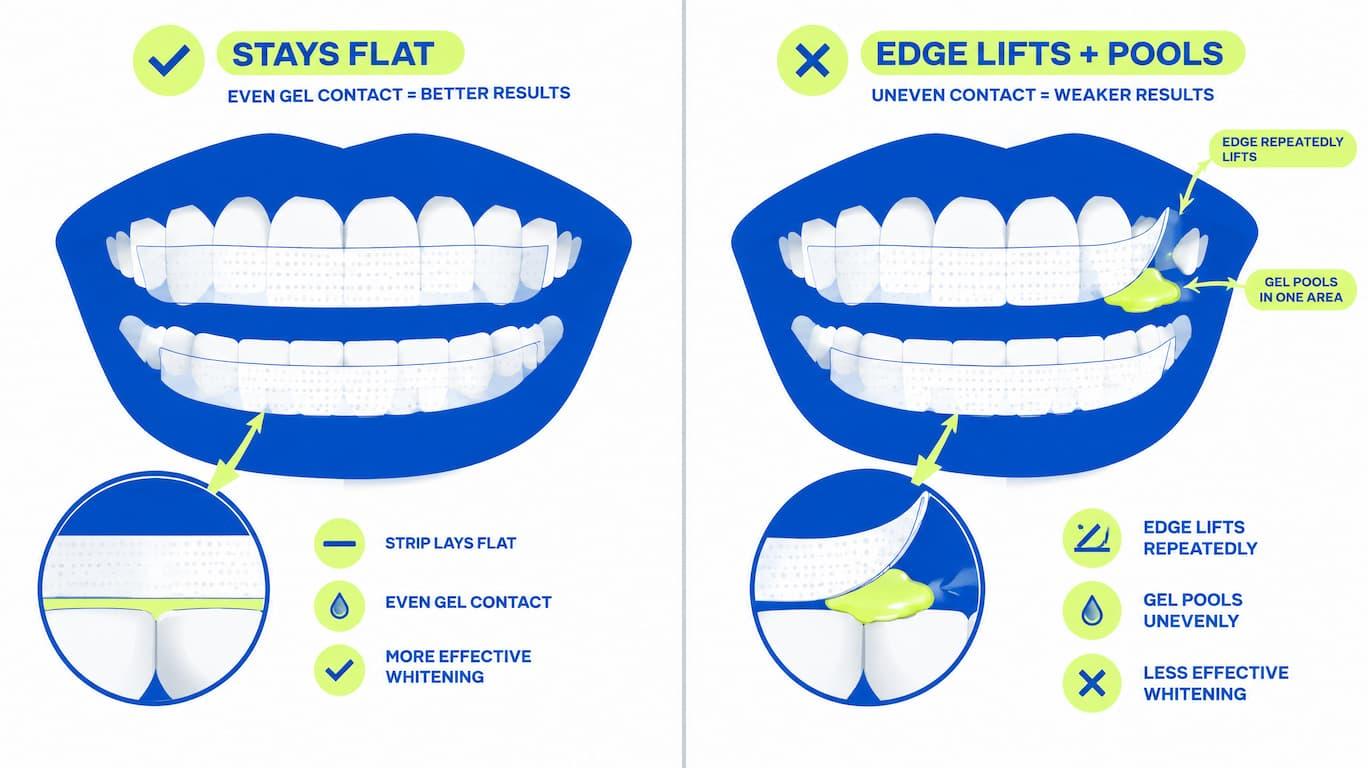
Yes. A little saliva getting around whitening strips is part of using them in an actual human mouth. The goal is not to sit there with your mouth open like you’re waiting for dental X-rays.
The distinction is simple: moisture around a strip is normal; moisture that changes the strip’s position is worth fixing. If the strip stays flat across your upper and lower teeth, the whitening gel can keep consistent contact. If an edge repeatedly lifts, the strip slides, or gel visibly pools in one area, contact can become less even.
The useful question is not whether saliva exists. It is whether excess saliva or whitening gel is pooling enough to move the strip. That difference between normal saliva and gel pooling is what can turn normal moisture into uneven whitening.
Can You Swallow Saliva With Whitening Strips On?
Yes, you can swallow saliva normally while using whitening strips as directed. Trying not to swallow for the entire directed wear time is unnecessary and, frankly, a strange way to spend a whitening session.
A small amount of whitening gel can mix with saliva during wear, so accidentally swallowing a little diluted saliva can happen. That is different from intentionally swallowing peroxide gel, chewing or swallowing a strip, or ingesting a large amount of product. If you accidentally swallow a notable amount and develop stomach irritation, throat discomfort, or other adverse effects, follow the product instructions and contact a healthcare professional or poison-control service for guidance.
The useful habit here is simple: don’t keep collecting saliva in your mouth because you’re afraid to swallow. Normal swallowing is part of normal wear.
Can You Close Your Mouth With Whitening Strips?
Yes. You can close your mouth with whitening strips on. In fact, a relaxed mouth usually makes the routine easier because you’re less tempted to poke, reposition, or supervise the strips every twelve seconds.
You can talk too, but constant conversation means more movement from your lips, cheeks, and tongue. If you notice that talking makes the strip slide or an edge lift, give your mouth a quieter few minutes. Your group chat will survive.
What you don’t need to do is keep your mouth open for the whole whitening process to ‘protect’ the gel from saliva. The strips are made to be used inside a moist mouth. Keep them seated, follow the directed wear time, and let them work.
The Moisture That Actually Matters Happens Before the Strip Settles
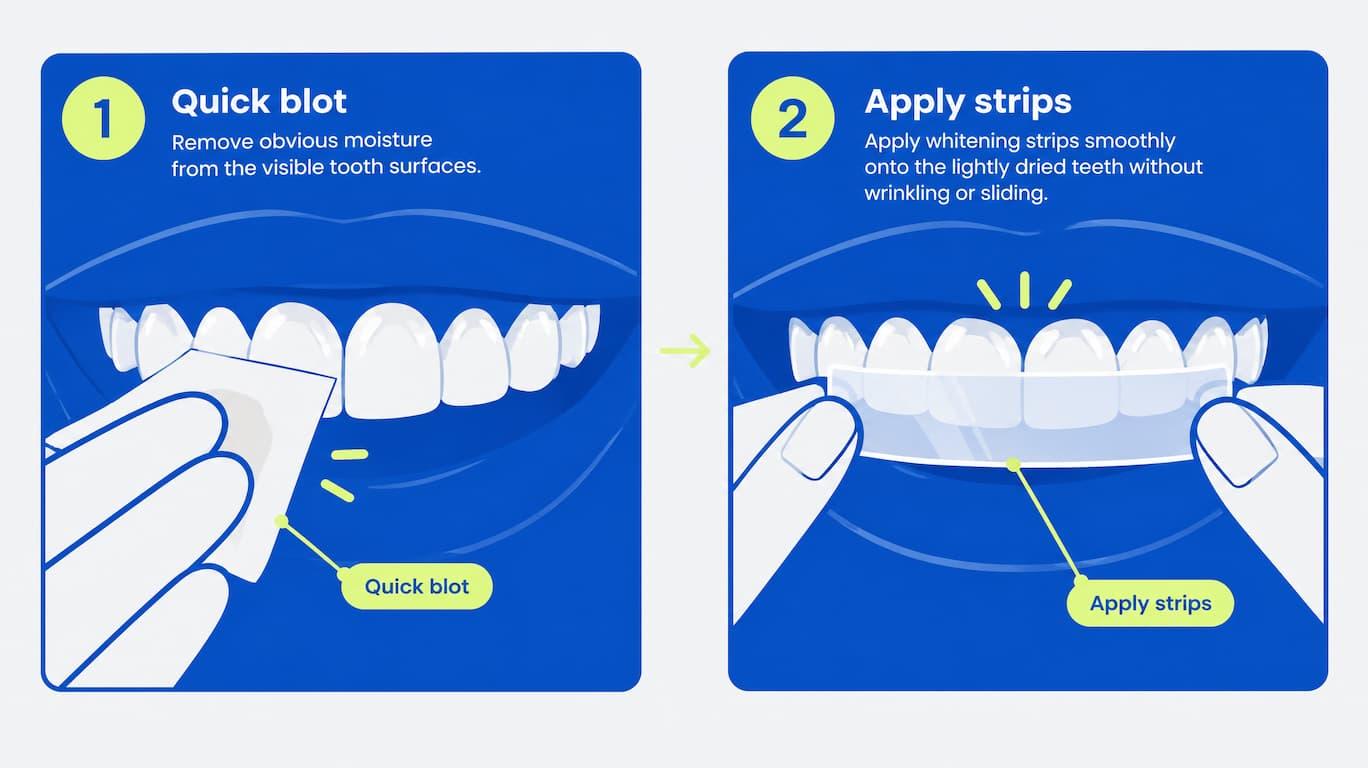
Here’s where saliva can become a results problem: the strip goes onto teeth that are so wet that it never gets a good grip in the first place.
A slick layer of excess saliva can make teeth whitening strips wrinkle, slide, or lift at the edges. That can move the peroxide gel away from parts of the tooth surface and create less consistent contact. Same whitening formula. Much messier delivery.
You don’t need bone-dry enamel. A quick blot across the visible tooth surfaces is enough to remove obvious moisture before you apply strips. Think less ‘dental lab,’ more ‘tiny bathroom-counter prep step.’
A quick blot is usually enough. SNOW’s 30-second teeth-drying method focuses on removing excess saliva before you apply strips, not trying to keep your mouth dry through the whole whitening treatment.
When the Strip Starts Sliding, Fix the Contact, Not the Chemistry
If your strip is sitting flat, a little saliva is background noise. If it keeps migrating toward your gums, folding over itself, or leaving one tooth barely covered, that’s the cue to pay attention.
-
Gently smooth a lifted edge back into place instead of adding more whitening gel. The goal is to restore contact, not increase the peroxide concentration.
-
Keep each strip centered across the teeth it’s designed to cover, and avoid letting peroxide gel sit unnecessarily on the gums.
-
Stick to the directed wear time. A messy application is not a reason to add bonus minutes or another whitening treatment.
-
If you develop notable tooth sensitivity, gum irritation, or pain, stop using whitening strips and follow the directions or ask your dentist for guidance.
The goal is even contact, not heroic commitment to a strip that has clearly given up on staying put.
Why Dissolving Strips Make Saliva Less of a Plot Twist
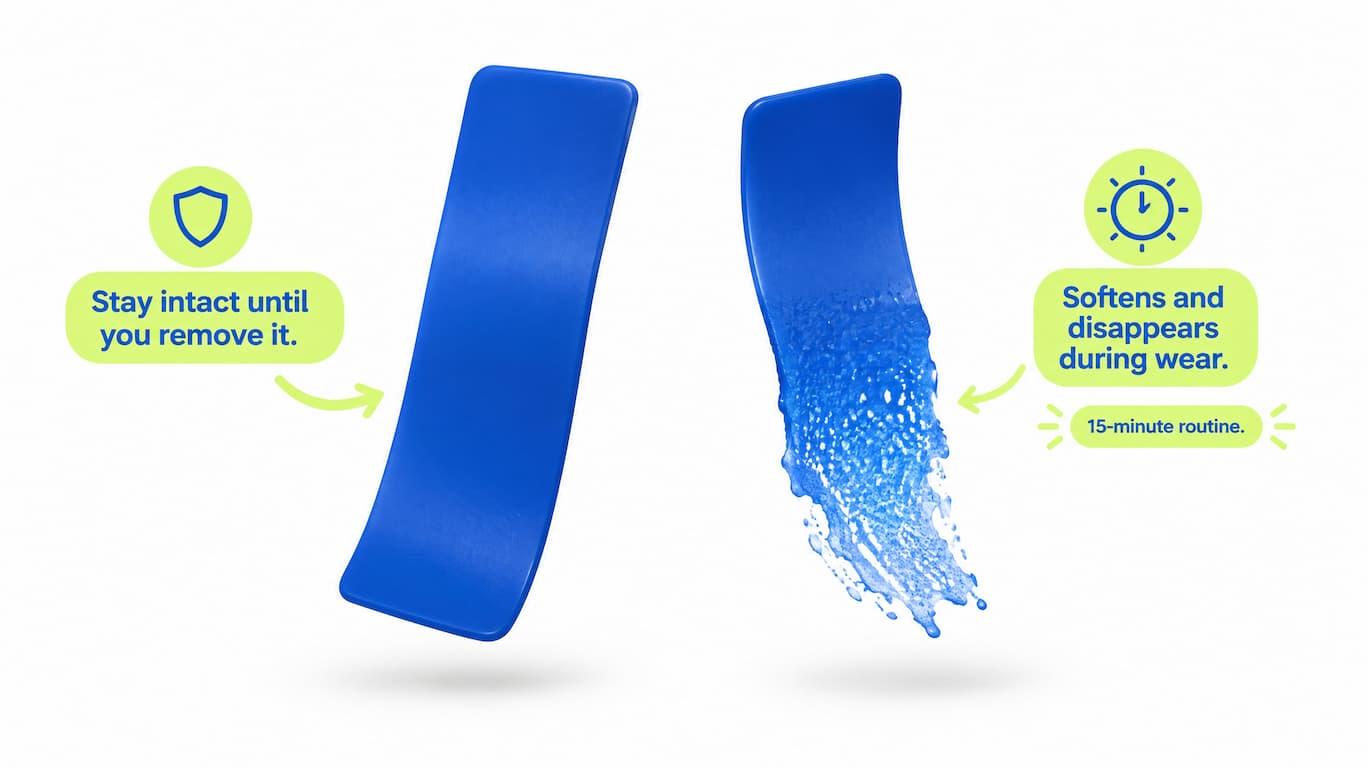
This is also where format starts to matter. A traditional peel-off strip needs to stay intact until you remove it. A dissolving strip is supposed to soften and disappear during wear, so moisture is part of the experience rather than an unexpected guest.
SNOW Dissolving Teeth Whitening Strips use a 15-minute routine and dissolve as you wear them. Lightly drying your teeth first still helps with initial placement, but once the strips are seated, normal saliva can do what saliva does. Press them across the visible tooth surfaces, then follow the whitening strip application steps for timing and wear. If your whitening journey needs a lower-fuss strip format, this is where dissolving strips earn their place.
Find Your SNOW Whitening Strips
A Better Strip Session Starts Before the Saliva Does
If excessive saliva keeps turning your whitening routine into a slip-and-slide, the best fix usually happens before the strip goes on.
-
Have the strip ready before you dry your teeth.
-
Blot the front surfaces of your teeth to remove obvious moisture. No scrubbing required.
-
Apply strips and smooth them into the tooth contours once, then leave them alone unless an edge actually lifts.
-
Keep the routine calm. Frequent talking, tongue-checking, drinking, or rinsing can increase mouth movement and make excess saliva feel even more noticeable.
That’s really it. Whitening already comes with enough mirror inspection. Your saliva does not need a performance review too.
Your Saliva Isn’t Sabotaging Your Whitening Routine
So, does saliva ruin teeth whitening strips? Normal saliva, no. Foaming can be a natural reaction, swallowing normally is fine, and closing your mouth is fine. The thing worth watching is excess moisture that keeps whitening strips from sitting evenly against your teeth and can lead to uneven whitening.
Here at SNOW, we like teeth whitening routines that make room for being an actual person with an actual mouth. Start with lightly dried teeth, place your strips carefully, follow the directed wear time, and let the whitening agents do their job on surface stains without turning normal saliva into the villain.
FAQs About Saliva and Whitening Strips
Whitening strips can come with a few oddly specific questions once they’re in place. Here are the ones worth knowing.
Should I spit while wearing whitening strips?
You can spit gently if excess saliva becomes uncomfortable, but you don’t need to spit constantly. Too much mouth movement can disturb the strip. If you can swallow normally and the strip stays seated, leave it alone and follow the product directions.
Why does saliva production increase with whitening strips?
Saliva production can increase when your mouth notices something new sitting against your teeth. Talking, moving the strips with your tongue, or repeatedly checking them can make excess saliva feel even more noticeable. It is usually a natural reaction. Keep your mouth relaxed, swallow saliva normally, and focus on whether the strips are actually sliding.
Can saliva cause uneven whitening?
Normal saliva does not automatically stop whitening strips from working. Uneven whitening becomes more likely when excessive saliva weakens adhesion or moves whitening gel away from part of the tooth surface. If the strip stays flat and coated across the teeth, normal moisture is usually just part of how whitening strips work.
When should I ask a dentist before whitening?
If you have ongoing tooth sensitivity, gum disease, enamel erosion, decay, unusual tooth discoloration, dental restorations, or other dental issues, ask your dentist whether at-home whitening is appropriate. A dentist can also explain when professional whitening or other professional treatments may make more sense for your teeth.


