

Teeth whitening costs can go from “cute little beauty upgrade” to “wait, how much?” very quickly. Professional whitening can cost hundreds of dollars per session, while at-home options can start in the single digits. Same goal. Very different receipt.
At SNOW, we think the useful question isn't only, “How much does teeth whitening cost?” It is what the price buys, how much professional involvement you get, and how easily the routine fits your life. This guide compares in-office whitening, dentist-take-home trays, OTC LED kits, strips, pens, powders, serums, and toothpaste formats using 2026 national estimates and current SNOW prices.
Key Takeaways
-
In-office whitening typically costs $300 to $1,000 per session, while dentist-provided take-home trays cost about $150 to $600.
-
OTC options span a much wider budget: LED kits are about $30 to $300, whitening strips $20 to $70, and whitening toothpaste $5 to $15.
-
Current SNOW options range from $15 Purple Toothpaste Tablets to the $59 Diamond Series Teeth Whitening Kit with one serum, giving at-home shoppers several price points to compare.
-
Cosmetic whitening is usually paid out of pocket. Repeat purchases, maintenance, and any financing costs can therefore matter as much as the starting price.
-
The best value depends on what you actually want to pay for: professional supervision, at-home convenience, a specific format, or a lower upfront cost.
Teeth Whitening Cost Comparison at a Glance
If you came here for the numbers, fair. Start here. This table compares every major whitening route covered in the article, from dentist-led treatment to OTC formats, and shows where current SNOW products fit.
The non-SNOW figures are 2026 national estimates, while the SNOW figures are current listed prices. The final column explains the practical tradeoff behind each range, because a cheaper receipt is not automatically the better routine.
|
Whitening option |
Typical 2026 cost |
Routine and best fit |
Relevant SNOW products |
|---|---|---|---|
|
In-office professional whitening |
$300 to $1,000 per session |
Dentist-led appointment; highest upfront cost and most direct supervision |
Not applicable |
|
Dentist take-home custom trays |
$150 to $600 |
Custom fit and professional guidance, with treatment completed at home |
Not applicable |
|
OTC LED whitening |
$30 to $300 |
Structured at-home sessions for shoppers who want a device-based routine |
LED Mouthpiece $39; Diamond Series Kit with one serum $59 |
|
OTC whitening strips |
$20 to $70 |
Low-equipment, pre-portioned sessions without a tray or brush-on applicator |
Dissolving Strips $44; Purple Dissolving Strips $49 |
|
OTC whitening pens |
About $39 for current SNOW options |
Portable, targeted application for daytime or overnight routines |
Whitening Pen $39; Overnight Whitening Pen $39 |
|
OTC powders and toothpaste formats |
$5 to $39 |
Whitening added to brushing, with no separate tray or strip session |
Whitening Powder $39; Purple Powder $39; Purple Toothpaste Tablets $15 |
|
OTC color-correcting serum |
$22 for the current SNOW option |
Quick optical brightening before events, photos, or meetings |
Purple Serum $22 |
Use the table to compare the full market first. The sections that follow then explain why professional care costs more, how at-home formats differ, and which SNOW product matches each OTC route.
Professional Teeth Whitening Cost: Where the Premium Goes
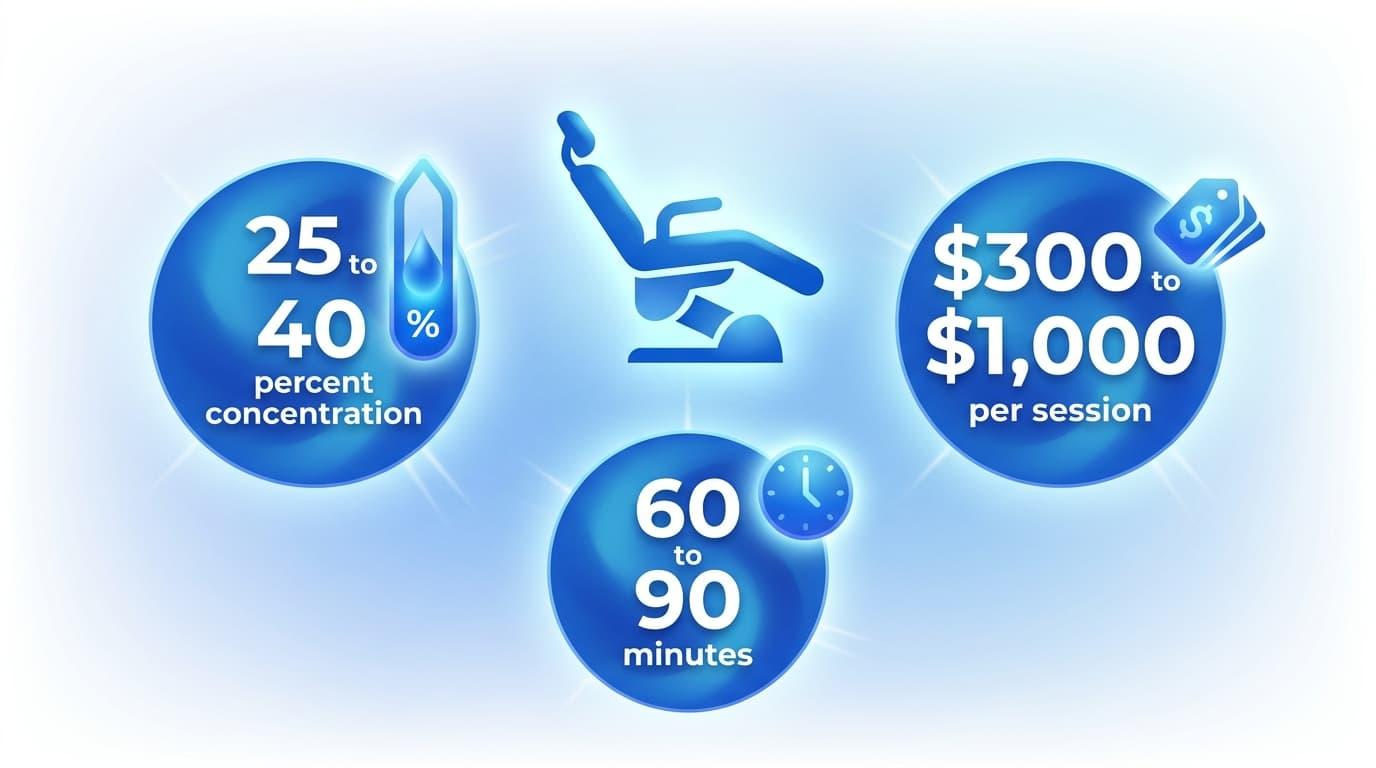
Professional whitening sits at the expensive end of the range because the price may cover more than whitening gel. It can also include dentist time, protective measures for surrounding tissues, the procedure in a dentist's office, and follow-up care.
In-office treatments often use hydrogen peroxide at 25 to 40 percent concentration as the active ingredient in professional bleaching agents, and that stronger setup helps explain the higher cost. That premium also reflects advanced technology and the planning involved in dentist-supervised whitening.
At about $300 to $1,000 per session, the final price depends on the provider, location, treatment setup, and services included. Professional whitening often delivers noticeable results in about 60 to 90 minutes. Treat the national range as a benchmark, not a guaranteed local quote.
Professional teeth whitening cost varies with what the quote includes. Ask for an itemized breakdown before comparing providers, since one price may cover a single session, while another may include take-home care or follow-up.
At-Home Teeth Whitening Cost: More Room in the Budget
At-home whitening changes the tradeoff. You skip the in-office appointment and fit the routine around your own schedule. Usually, that means a lower upfront cost. It also means nobody is standing beside you making sure you actually follow the directions. Tragic, but manageable.
Dentist Take-Home Trays: Professional Help, Home Schedule
Custom Take Home Trays from a dentist usually land around $150 to $600 on that same price map. You still get professional fitting and guidance, but the actual whitening happens at home. In other words, part dentist visit, part DIY, and priced somewhere between the two worlds.
Custom trays can make sense if you want a dentist to handle the fit and guide the process, but you would rather complete each session at home.
At-home kits usually take one to two weeks for noticeable results, and dentist take-home kits commonly last six months to one year.
Before agreeing to the price, ask whether whitening gel, whitening trays, replacement trays, and maintenance treatments or refills are included. Tiny extras have a suspicious talent for becoming a much less tiny total.
OTC Whitening: Compare the Format, Not Just the Shelf Price
OTC prices vary by format, with over-the-counter products such as at home kits like LED kits running from about $30 to $300, strips from $20 to $70, and whitening toothpaste from $5 to $15.
Many of these options rely on whitening agents with peroxide levels under 10 percent concentration, which helps explain the slower, milder whitening approach compared with professional care.
Those ranges are broad enough to hide a small identity crisis, so the SNOW catalog below breaks the options down product by product.
SNOW Whitening Products by Price and Routine
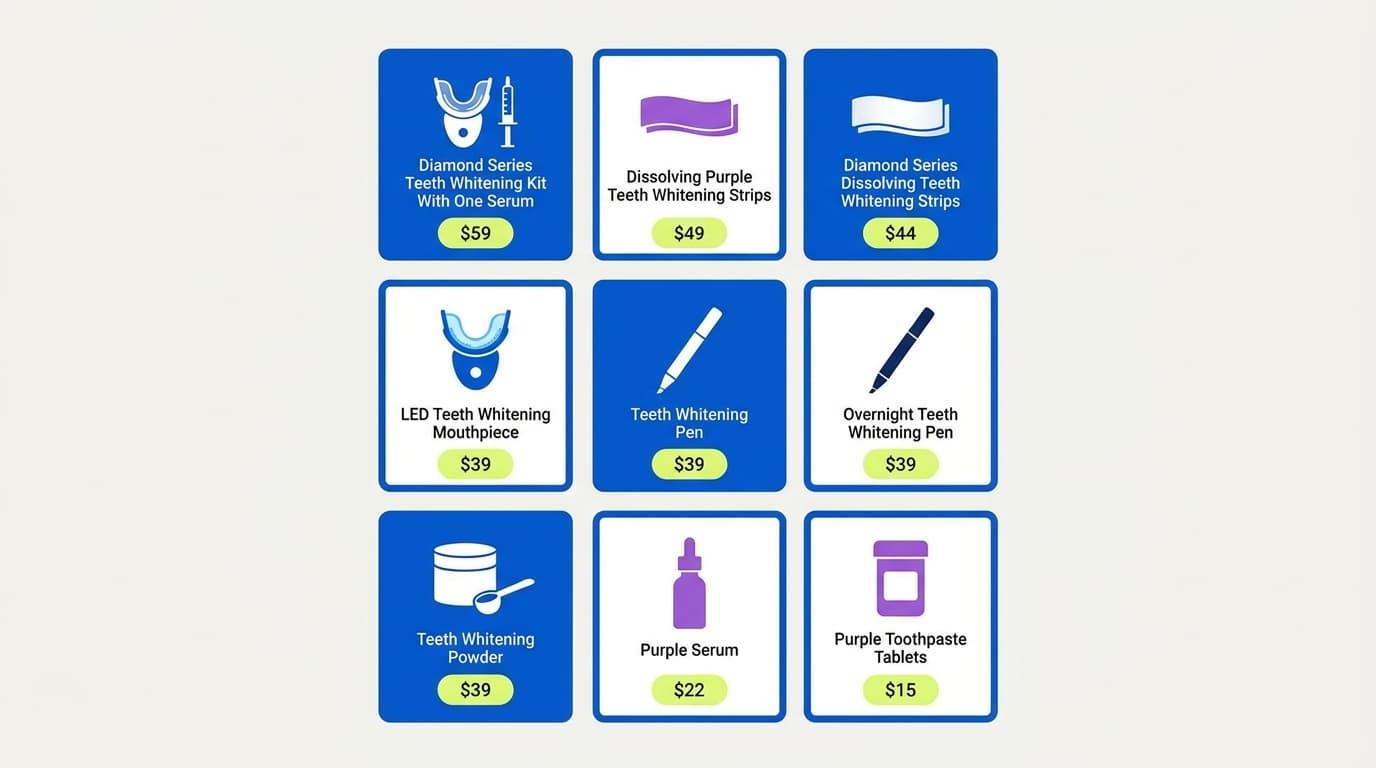
Each SNOW option below has a different job, price, and place in a routine. Start with the behavior you can realistically maintain, then decide whether you need a complete kit, a portable applicator, a brushing add-on, dissolving strips, or a quick purple boost.
SNOW Diamond Series Teeth Whitening Kit With One Serum $59
This is the most complete SNOW option in the current price comparison. The wired kit includes an LED mouthpiece, a whitening serum, and a shade guide, so it suits shoppers who want a structured 21-day routine rather than assembling the pieces one by one. More commitment than toothpaste, yes. Still considerably less dramatic than a $1,000 dental receipt.
Build Your Routine With the SNOW Whitening Kit
SNOW LED Teeth Whitening Mouthpiece $39
The mouthpiece is for people who already have a compatible whitening serum and want to add LED use without buying another full kit. It is wireless and rechargeable, which keeps the setup tidier and the bathroom-counter situation under control. Because the serum is separate, compare the combined cost before declaring this the cheaper route.
Add the SNOW LED Mouthpiece to Your Routine
SNOW Diamond Series Dissolving Teeth Whitening Strips $44
Each package offers a strip routine that dissolves, so there is nothing to peel off or throw away afterward. Choose this format when you want a defined treatment rather than a tray, mouthpiece, or brush-on step. It is the low-equipment option for anyone whose patience ends where complicated setup begins.
Choose SNOW Dissolving Whitening Strips
SNOW Dissolving Purple Teeth Whitening Strips $49
These strips combine the dissolving format with purple color-correcting technology for an immediate optical brightening effect while the strip routine does its thing. They fit event prep and quick visual touch-ups better than shoppers seeking only a standard whitening strip. Five dollars more than the regular version buys the purple feature, not a new personality. Sadly.
Try SNOW Purple Dissolving Strips
SNOW Teeth Whitening Pen $39
The standard pen uses a controlled brush tip for applying serum directly to the front of the teeth. It works best for people who want a portable daytime format they can keep at a desk or pack after coffee. You are paying for targeted application and portability, not a tray or full-mouth device.
Target Stains With the SNOW Whitening Pen
SNOW Overnight Teeth Whitening Pen $39
The overnight pen uses a gradual-wear format designed for bedtime, so it asks for less attention during the day. Pick it when an evening habit is easier to maintain than a timed daytime session. Same $39 price as the standard pen, completely different appointment with your calendar.
Try the SNOW Overnight Whitening Pen
SNOW Teeth Whitening Powder $39
This powder replaces the brushing step, eliminating the need for strips, trays, or a separate wearing period. It is the practical choice for someone who wants whitening to piggyback on a habit that already exists. Your toothbrush was going to clock in anyway. It may as well take on another assignment.
Add SNOW Whitening Powder to Your Brush Routine
SNOW Purple Teeth Whitening Powder $39
The purple powder keeps the brush-on format but adds color correction for an immediately brighter-looking effect. It makes more sense for shoppers drawn to purple technology than those who simply want the standard powder. The price is the same, so the deciding factor is the result and routine you prefer.
Brush With SNOW Purple Whitening Powder
SNOW Purple Serum $22
Purple Serum is the mid-priced color-correcting option, designed as a quick brightening boost rather than a complete kit. It suits occasional use before photos, meetings, or events when you want something faster than committing to a full strip schedule. Very little ceremony. Your calendar already supplied enough of that.
Get a Quick Brightening Boost With SNOW Purple Serum
SNOW Purple Toothpaste Tablets $15
At $15, the tablets are the lowest-priced SNOW entry in this comparison. They combine a familiar brushing routine with purple color correction, making them the easiest starting point for budget-conscious shoppers who do not want another separate whitening session. Chew, brush, rinse, and continue being financially responsible.
Start With SNOW Purple Toothpaste Tablets
What Changes Your Teeth Whitening Cost?
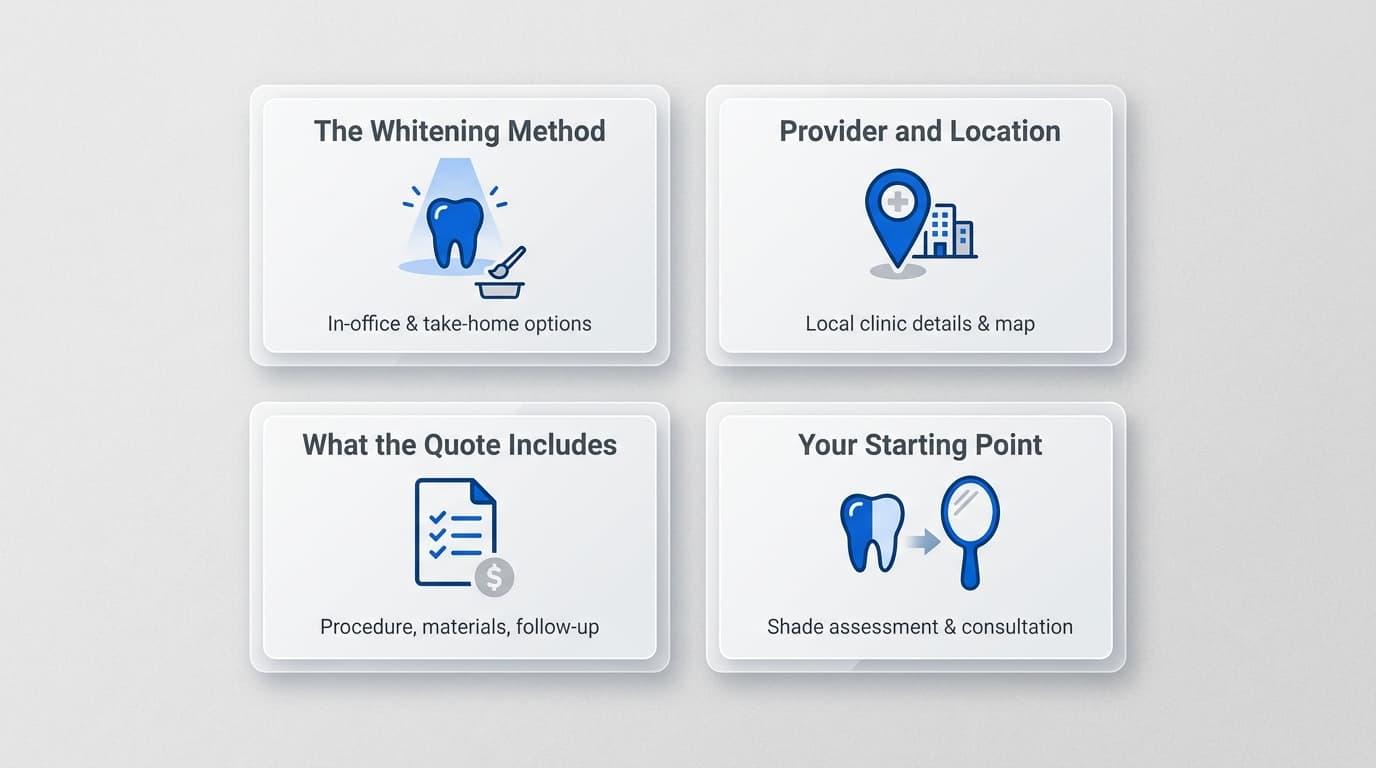
Once the format is chosen, the sticker price is only the beginning. Your final cost can still vary based on the method, local provider rates, what the purchase includes, and whether whitening suits your starting shade and dental work.
The Whitening Method
In-office treatment generally costs more because the price includes professional time and the dental setting. At-home products remove much of that overhead.
Provider and Location
Professional pricing varies by city, practice, and provider, and whitening prices and teeth whitening prices often run higher in urban markets than in smaller towns for the same treatment type. Compare local quotes for the same treatment type and included services.
What the Quote Includes
A quote may include one session, take-home trays, refills, follow-up care, or consultation fees, especially on a first visit or cosmetic assessment, or charge for them separately. Request the full breakdown before choosing the lowest advertised price. The total cost may also rise if extra visits or prep care are needed before treatment.
Your Starting Point
Yellow teeth can have different causes, and not all types of discoloration respond equally to whitening. In general, surface stains and yellow discoloration tend to respond better than deeper medication related discoloration.
Crowns, veneers, and fillings also do not lighten like natural teeth, and a dentist may also check gum health, gum disease, or gum recession before whitening if oral health could affect suitability, so ask what result is realistic before paying for treatment because existing dental work may need replacement if the surrounding natural teeth are whitened to a lighter shade.
Does Dental Insurance Cover Teeth Whitening?
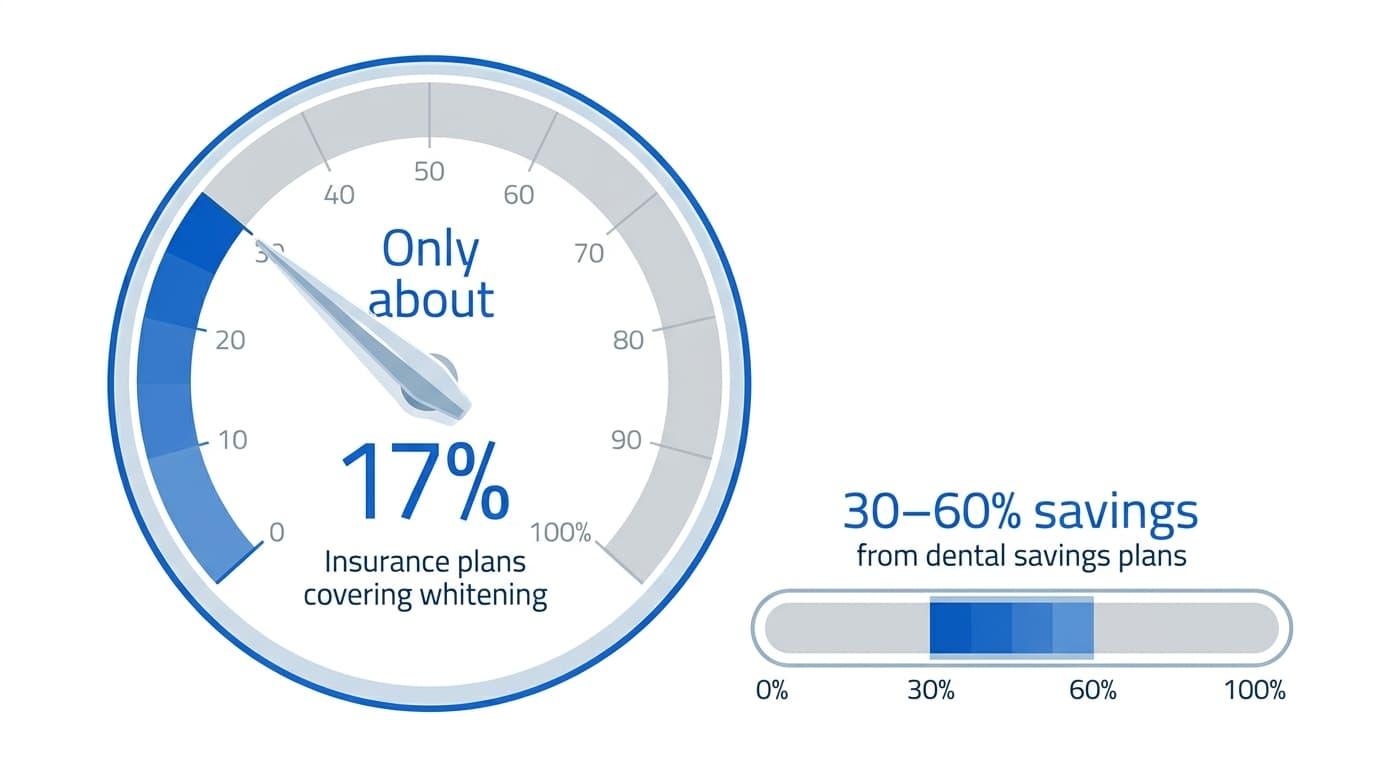
Cosmetic teeth whitening is generally considered cosmetic treatment, so most dental insurance plans do not cover whitening and it is usually paid out of pocket. Check your plan’s benefits and exclusions before booking rather than assuming the whitening portion of a dental visit is covered.
Only about 17% of most dental insurance plans offer any whitening benefit, so verify coverage directly with your provider.
Teeth whitening cost without insurance is therefore the more useful figure for your budget. If a dental office offers financing, compare the total repayment amount, not only the monthly payment. If dental insurance plans do not help, dental savings plans can save 30–60% on treatment, and payment plans may also reduce upfront costs.
What Does Teeth Whitening Cost Over Time?
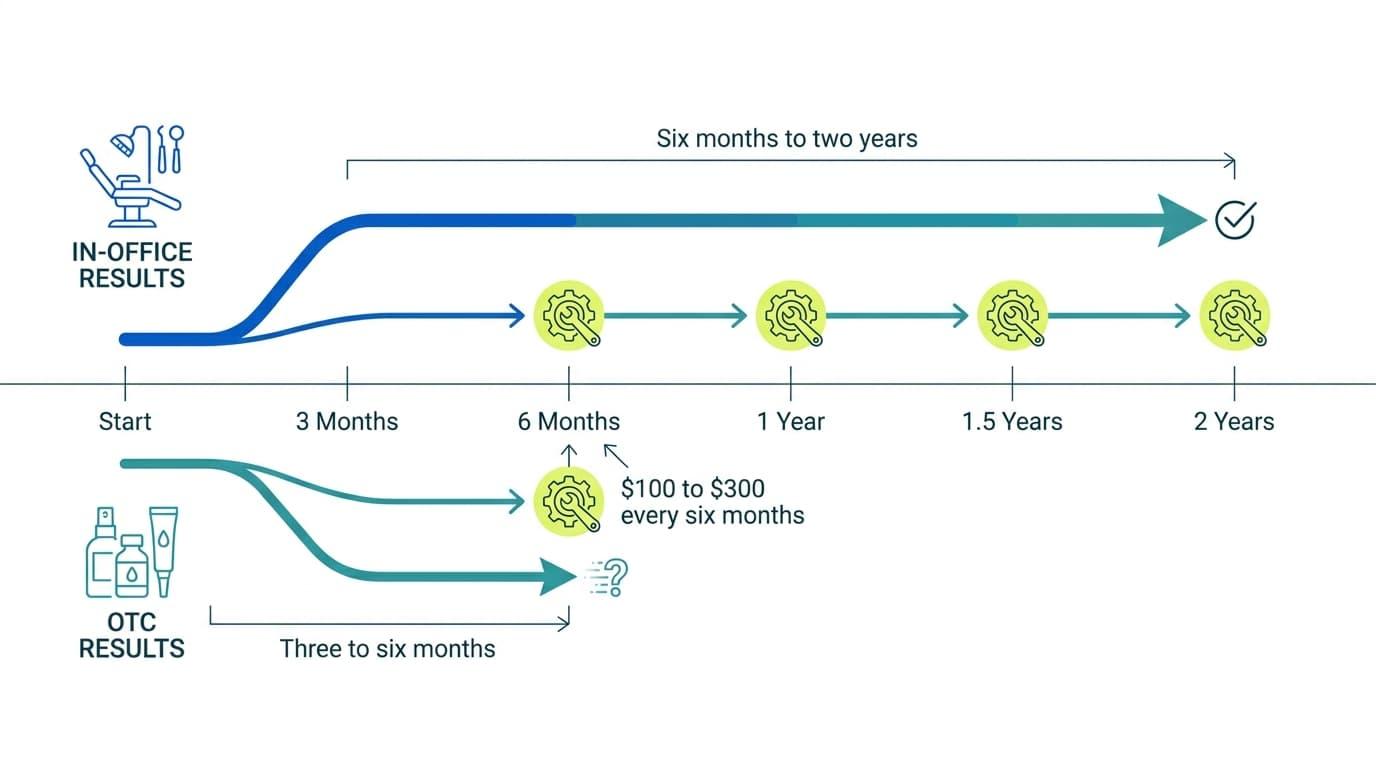
Teeth whitening results are not always a one-time purchase. Long-term costs may include replacement strips, gel refills, touch-ups, or another professional treatment as tooth color changes over time.
In office treatments often last about six months to two years, while over the counter products more often last around three to six months.
Before choosing a method, check the likely maintenance schedule and cost. A lower starting price may not remain the lowest-cost option if it requires frequent repurchasing or short-lived whitening results. Maintenance treatments or touch-ups commonly cost about $100 to $300 every six months.
How long does teeth whitening last? Results may fade faster with coffee, tea, or tobacco use.
Choosing the Right Whitening Option for Your Budget
Choosing the right whitening option starts with matching the overall whitening approach to your budget and goals. Professional whitening has the highest upfront price, but it includes the most direct supervision and keeps the process inside the dental office.
Dentist take-home trays lower the price while retaining custom fitting and guidance. Some people still pay more because brighter teeth and a brighter smile matter enough to justify the premium.
OTC LED kits require a structured, device-based routine; strips reduce setup; pens target specific areas; and powders, serums, or toothpaste formats break whitening into smaller daily steps.
SNOW covers the OTC side of that comparison rather than the dentist-led categories. Use the catalog above to match one format to one real habit, then compare the upfront price with refills, replacement products, and the time the routine asks from you.
If you mainly want to whiten teeth gradually at home, compare refills and routine fit, not just the first purchase. Buying three abandoned options is not a budget strategy. It is a bathroom-drawer collection.
Whitening Safety Belongs in the Cost Conversation Too
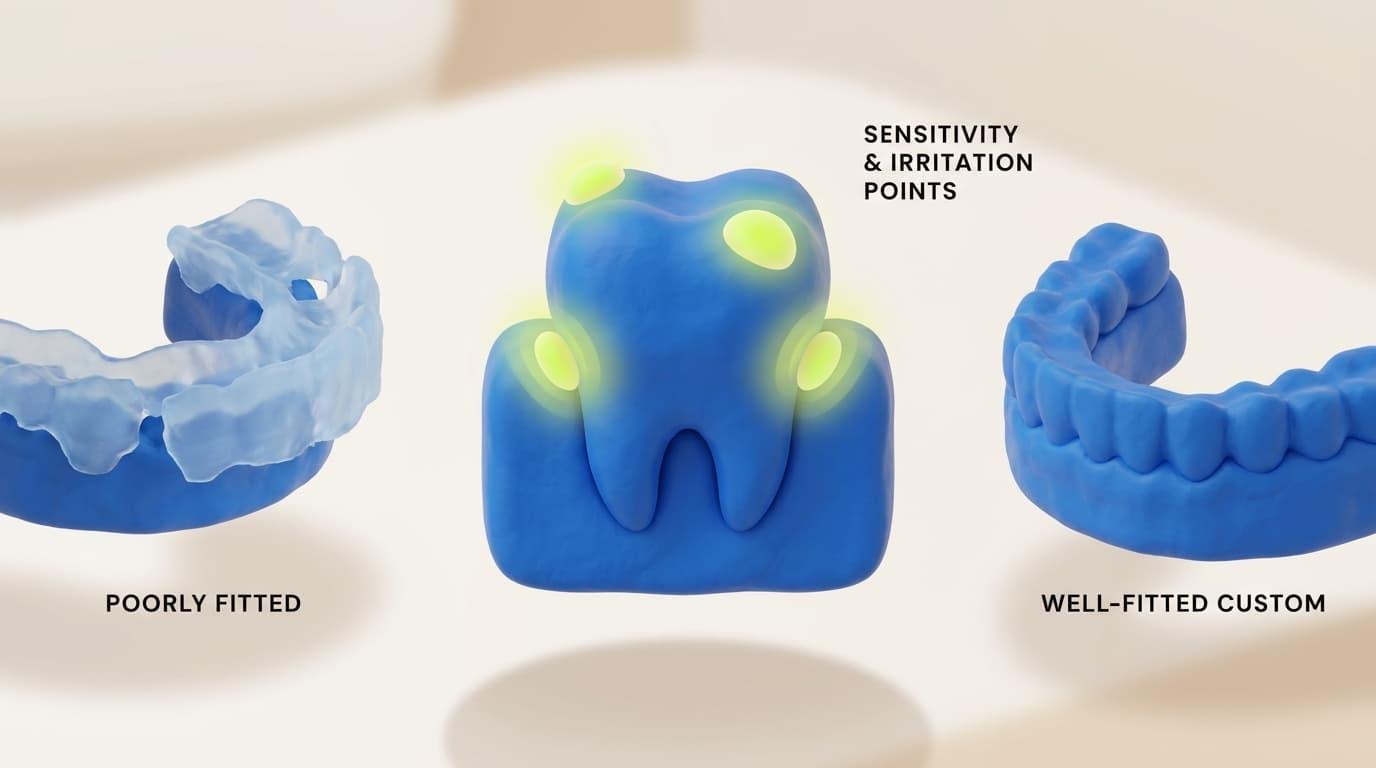
Tooth sensitivity and gingival irritation are common adverse effects of whitening, and whitening agents can irritate soft tissue when they contact the gums.
Temporary tooth sensitivity and gum irritation are usually temporary side effects, but the risk rises with harsher formulas or poorly fitting trays. Follow product directions and stop and consult a dentist if you experience pain, discomfort, or sensitivity.
Research comparing whitening methods shows differences in effectiveness and adverse effects. A separate review of at-home approaches reinforces why using more product or extending wear time beyond the directions is not a better value. Boil-and-bite trays may increase the risk of uneven whitening and soft-tissue contact compared with better-fitted trays.
What's Worth Paying For?
The best value is not automatically the cheapest or most expensive option, so is professional whitening worth the higher price for some patients?
In-office whitening may justify its premium when supervision matters most, and many people find professional whitening worth it for faster, more predictable results delivered in the dentist's office; custom trays balance professional input with home use; strips and pens prioritize convenience; and brushing-based formats keep the routine familiar.
SNOW offers enough formats to match very different budgets and routines. Compare the first price, what must be repurchased, and how naturally the method fits your day before choosing.
Compare All SNOW Teeth Whitening Products
Teeth Whitening Cost FAQs
You have the main price ranges. These last questions cover a few cost decisions that are easier to answer once the calculator has done all it can.
What Is the Cheapest Teeth Whitening Option?
Whitening toothpaste is the least expensive category in this comparison at about $5 to $15. Whitening strips cost starts around $20, while OTC LED kits start around $30. The best value still depends on whether the format fits your routine and goals.
How Much Should I Budget for At-Home Teeth Whitening?
Budget roughly $5 to $300 for OTC whitening, depending on the format, or $150 to $600 for dentist-provided custom trays. Consider expected refills or repeat purchases when setting the total budget.
Is Professional Teeth Whitening Worth the Cost?
It can be if dentist supervision and an in-office process are worth the higher price. For many people comparing options, laser whitening is one type of in-office treatment to weigh when deciding whether professional whitening is worth it. Laser whitening costs are usually higher because of advanced technology and, in some systems, laser activation of the gel. If you prioritize a lower upfront cost and the ability to whiten on your own schedule, an at-home option may offer better value.
Do Crowns, Veneers, or Fillings Affect Whitening Value?
They can. Whitening agents and bleaching agents do not change the color of crowns, veneers, or fillings the way they affect natural enamel. Whitening changes the shade of natural teeth, but tooth-colored restorations do not respond the same way. If visible crowns, veneers, or fillings are present, ask your dentist what result is realistic before paying for treatment, since matching them afterward can raise the total cost if replacements are needed.


