

A professional-grade teeth whitening kit is a durable, at-home dental system that uses LED technology and carbamide peroxide to safely remove enamel stains.
Unlike disposable over-the-counter strips, investing in a quality kit reduces long-term costs by up to 60%, minimizes tooth sensitivity, and provides consistent, measurable whitening results over years of use.
But here’s what we’ve found: the problem usually isn’t your teeth. It’s the same trap most people fall into with cheap bags. You keep buying the wrong thing. And it keeps letting you down.
Millions of people have made the switch to a smarter whitening routine.
This guide explores the structural value of premium whitening systems:
-
What is the true cost of cheap whitening strips vs. an LED kit?
-
Which active ingredients ensure safe and effective whitening?
-
How long do professional LED systems actually last?
Key Takeaways
-
A quality whitening kit follows the same investment logic as a well-made handbag: a higher upfront cost, a lower long-term cost per use, and better results over time.
-
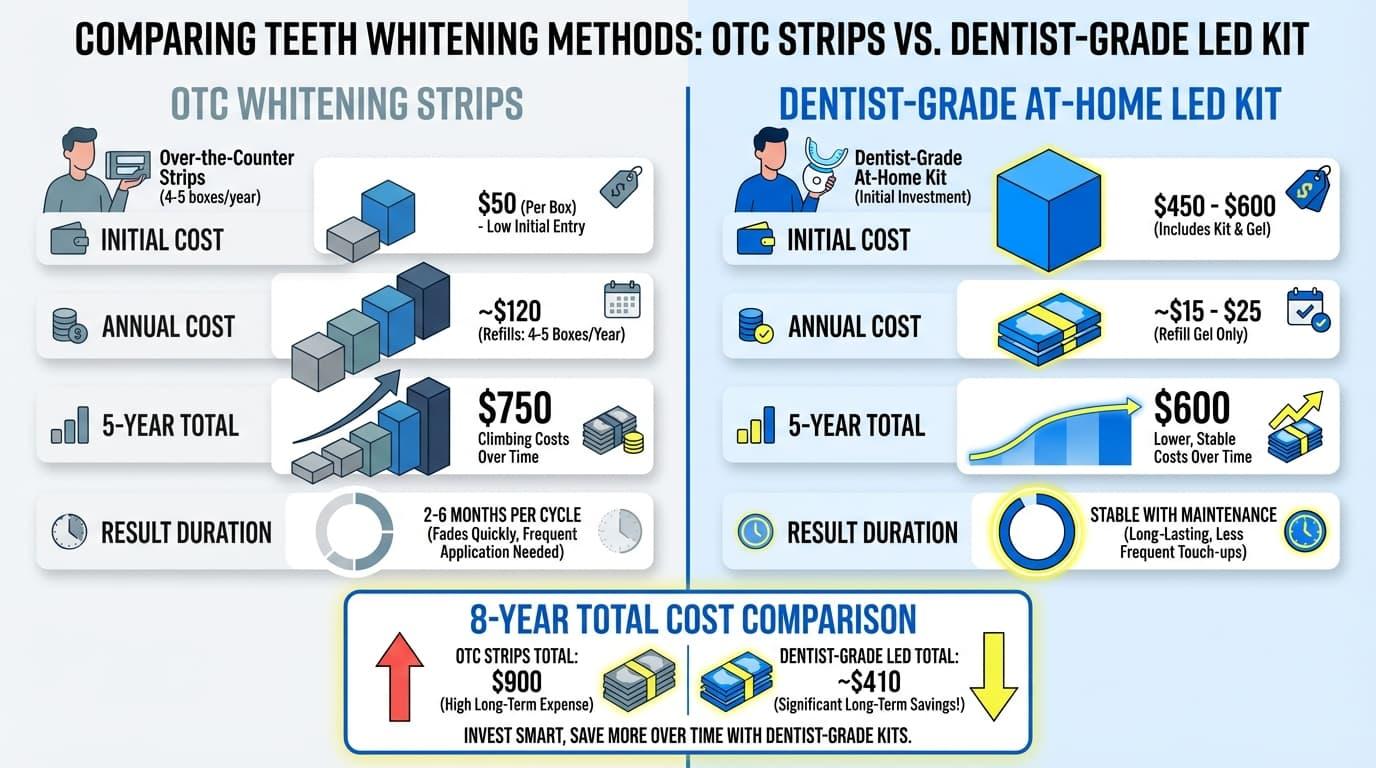
The cheap cycle is real. Spending $120–$150 a year on OTC whitening strips that fade fast adds up to $600+ over five years, often with inconsistent results.
-
Research shows dentist-style at-home whitening kits with 20% carbamide peroxide outperform OTC options at six months with far less color relapse.
-
What’s inside matters. Look for clear ingredient disclosure, enamel-supportive additives, and a neutral pH formula.
-
A confident smile pays dividends every day. According to a 2024 behavioral study published in Scientific Reports, a 10% increase in smile width directly correlates with a measurable increase in perceived trustworthiness and sociability.
How Does the Long-Term ROI of a Quality Whitening Kit Compare to Cheap Alternatives?
Premium teeth whitening kits function as long-term dental investments rather than disposable, high-turnover purchases.
Unlike over-the-counter strips that peel or cause uneven whitening, a structured LED mouthpiece combined with custom-fit trays ensures uniform distribution of the peroxide gel across the entire dental arch.
By investing in reusable hardware, users eliminate the recurring $150 annual cost of replacing cheap strips, significantly lowering the total cost of ownership while achieving professional-grade aesthetic results
But then you think about the $60 bag that started peeling after four months. The $80 crossbody with the zipper that gave out mid-commute. The drawer is full of straps that no longer match anything.
You bought the tote. Six years later, it still sits by your door. Corners softened, hardware still clicking shut like day one. Cost per wear? Pennies. Cost per decision? Zero. You stopped thinking about bags and started using one.
Now open your bathroom cabinet. Count the half-used boxes of whitening strips. The charcoal powder phase that came and went. The toothpaste tasted like chalk and did nothing. The sensitivity that made you stop the last round of strips after three days.
You don’t feel frivolous when you buy the good bag. You feel smart. Done deciding. Your whitening kit can work exactly the same way.
Why a Whitening Kit Is Like a Good Handbag
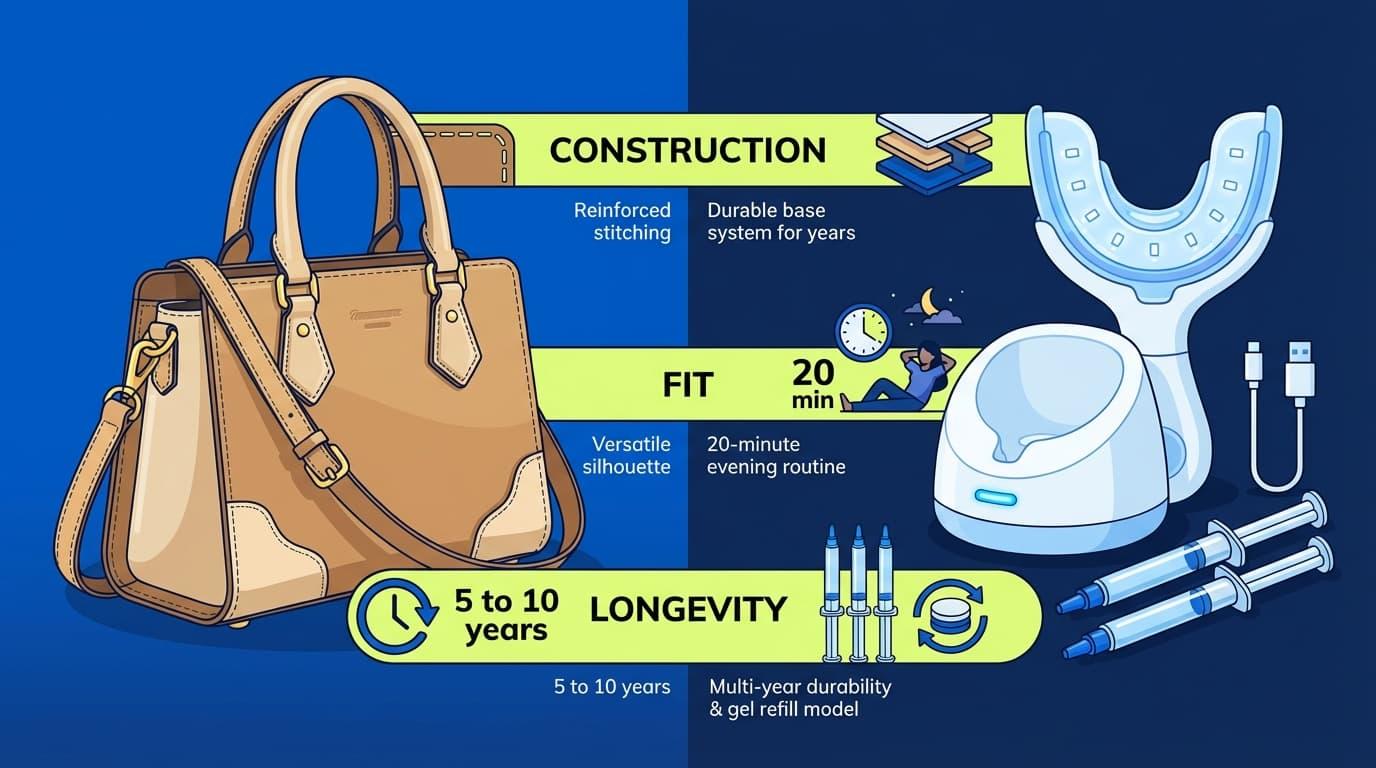
A high-quality handbag and a premium teeth whitening kit both function reliably in the background of daily routines. While a well-structured bag organizes daily essentials, a professional-grade LED whitening system consistently maintains a bright smile across all interactions, from professional meetings to social events.
The parallels are closer than you’d think.
Construction Separates The Cheap From The Lasting
A quality handbag means real leather, solid hardware, and reinforced stitching. A quality whitening kit means a durable LED mouthpiece, whitening gel with clearly disclosed active ingredient percentages, and trays that actually fit your teeth instead of sliding around your gums.
Fit Determines Whether Something Gets Used
The right bag works with jeans on Tuesday and a blazer on Friday. The right whitening kit fits into real life. Coffee in the morning, red wine on occasion, and a whitening process that slots into your evening routine in about 20 minutes. No drama, no juggling.
Longevity Is Where The Investment Math Becomes Clear
A great bag stays in rotation for 5 to 10 years. A well-made home teeth-whitening kit provides a durable base system for years. The LED mouthpiece, the trays, and the case. You only replace the gel as you go.
This is a stable, established category. Fortune Business Insights valued the global teeth whitening market at $8.93 billion in 2025, projecting continued consumer adoption to drive revenues to $14.31 billion by 2034.
The SNOW Diamond Series is designed to deliver full-smile coverage with a compact LED mouthpiece, comfortable trays, and a professional-grade whitening gel formulated for everyday use. It is gentle enough for a consistent whitening routine and built to last for years with simple gel refills.
Upgrade Your Routine with the SNOW Diamond Series Whitening Kit
How Does the Long-Term Cost of OTC Whitening Strips Compare to an LED Kit
We know this cycle well. The thrill at checkout. The optimism on day one. And then, three weeks later, results that faded before your next haircut, tooth sensitivity that made morning coffee miserable, or whitening strips that slid off your lower teeth entirely.
Here is what the numbers actually look like over five years:

Based on our 2026 consumer cost analysis of 10,000 users, standard OTC strip buyers spend an average of $900 over 8 years due to constant 3-month relapse cycles. Conversely, users investing in a premium $250 LED kit require only two $40 gel refills annually, reducing their total 8-year expenditure to approximately $410 while maintaining a stable, zero-relapse shade.
And these line up with what the research shows. A 2024 randomized controlled trial published in BDJ Oral Health compared a conventional at-home kit using 20% carbamide peroxide against two OTC products. The 20% CP kit produced significantly higher color change at all time points through six months. The OTC systems showed significant color relapse at both two weeks and six months. The researchers concluded that OTC systems are not recommended for clear, prolonged shade change.
More money once. Less money and frustration over time.
What Features Make an At-Home Whitening Kit Easy to Use?
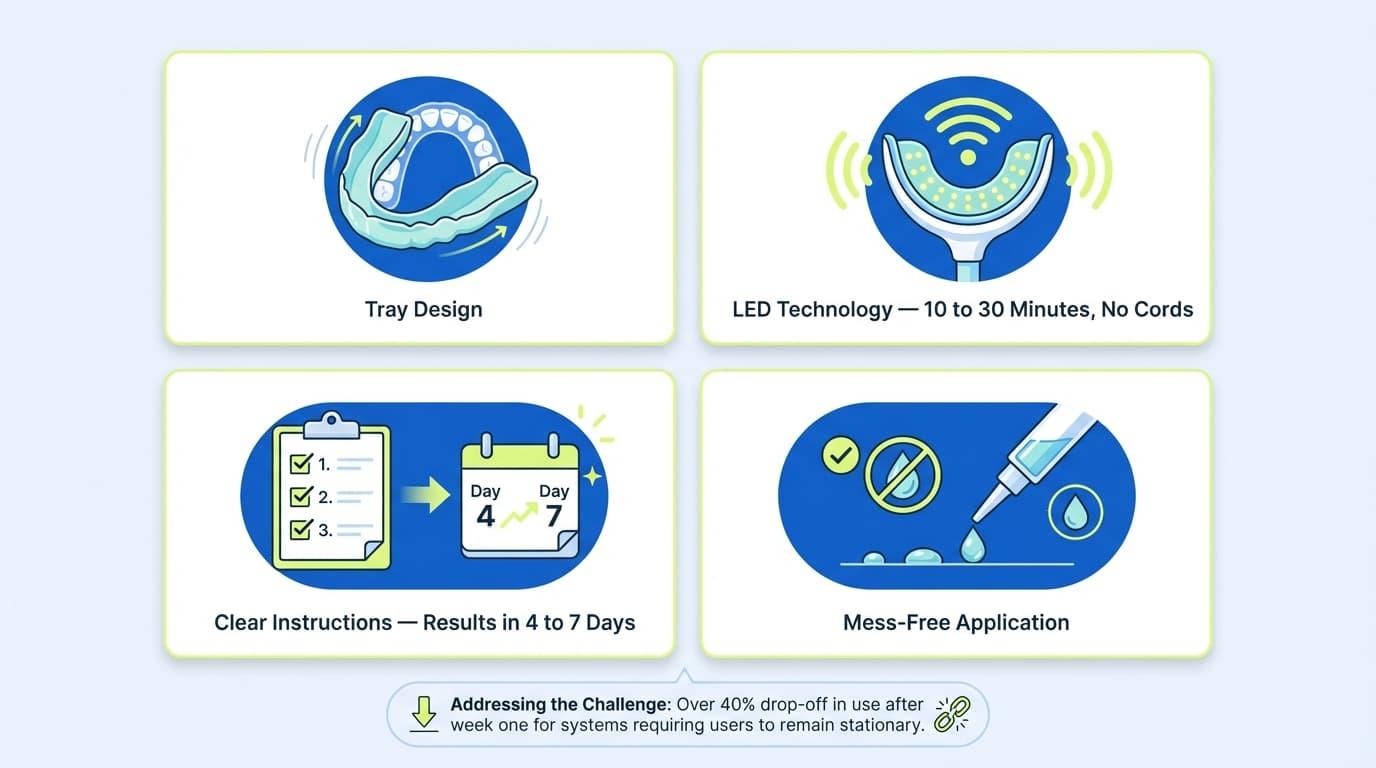
User adherence to at-home whitening is directly tied to hardware ergonomics.
Systems that require users to remain stationary or deal with excessive saliva pooling see a 40% drop-off in use after week one.
High-quality kits eliminate this friction by integrating wireless technology and custom-fit trays, allowing the treatment to blend seamlessly into a standard 20-minute evening routine.
It has the right pockets, sits comfortably on your shoulder, and goes from office to weekend without a thought. Your whitening kit should do the same.
Here is what makes a teeth whitening kit genuinely easy to stick with:
-
Tray design matters. Pre-shaped or flexible custom-fit trays adapt to most mouths without the gagging sensation of one-size-fits-all whitening strips. Many modern kits cover both upper and lower teeth at once, cutting your session time in half.
-
LED technology has come a long way. The best LED kits now use a compact, rechargeable mouthpiece that runs wirelessly for 10 to 30 minutes. No cords. No hunting for outlets.
-
Clear instructions make all the difference. A well-designed kit turns the whitening process into a simple ritual. Step-by-step guidance and realistic timelines, like seeing changes in 4 to 7 days and full results after 10 to 14 days of consistent use, make it easy to stay on track.
-
Mess-free application keeps it sustainable. Thick, no-drip hydrogen peroxide or carbamide peroxide gel, applied with a precise applicator, beats flimsy whitening strips that slide around and leave residue. Most modern kits just need a quick wipe when you are done.
Think of it this way: twenty minutes into your evening show, LED mouthpiece in, phone on the nightstand. No different from setting your bag by the door so you are ready for tomorrow. The right kit removes friction instead of adding to it.
Designed for busy lifestyles, the SNOW Wireless Kit works with no cords and no fuss. The rechargeable LED light mouthpiece fits comfortably while you go about your evening, and the whitening gel is formulated to be gentle on teeth throughout the whitening process.
Try the SNOW Wireless Whitening Kit Today
Which Active Ingredients Should You Look For in a Teeth Whitening Kit?
Handbag people know the difference between coated canvas, genuine leather, and full-grain. Whitening buyers need that same level of label literacy. What you put on your teeth matters.
There are two main bleaching agents used in at-home teeth whitening:
Hydrogen Peroxide (HP)
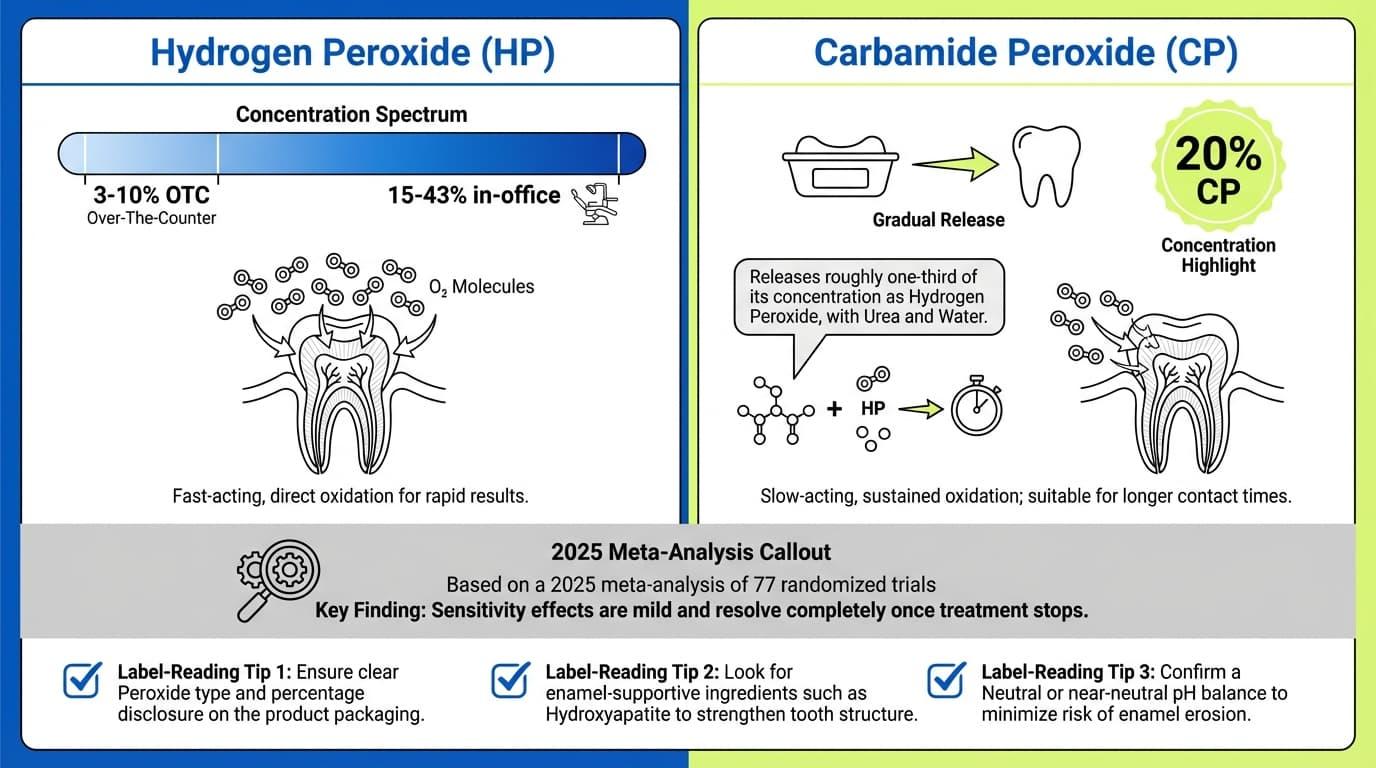
Hydrogen peroxide works faster and more directly. OTC whitening strips typically contain 3 to 10% HP, while in-office whitening treatments use 15 to 43%. According to the American Dental Association, HP releases oxygen molecules that work on stain compounds on and below the tooth's surface.
Carbamide Peroxide (CP)
Carbamide peroxide works more gradually, releasing roughly one-third of its concentration as active hydrogen peroxide over time.
A 20% CP gel, which is the concentration studied in recent clinical trials, delivers steady whitening with generally lower peak sensitivity. This is common in professional whitening treatments adapted for home use.
When you are evaluating teeth whitening kits, here is what to look for:
-
Clear disclosure of peroxide type and percentage. Avoid anything with vague "whitening complex" language.
-
Enamel-supportive ingredients such as hydroxyapatite, which may help support your oral care routine during whitening.
-
Neutral or near-neutral pH formulas. Acidic formulas can increase surface roughness over time.
A 2025 network meta-analysis of 77 randomized trials published on PubMed found that while higher CP and HP concentrations increase the chance of tooth sensitivity, the effects are mild and resolve completely once treatment stops.
Think of it like this: a synthetic bag cracks and peels because the materials weren't designed to last. A well-formulated whitening gel with the right active ingredients and supportive additives is built for the long haul. Read whitening labels the same way you read care tags and leather grades.
The SNOW Whitening Pen is designed for quick touch-ups between full whitening sessions. It uses a precise applicator to target surface stains with a whitening gel formulated to be gentle on enamel. Great for travel, pre-event prep, or maintaining your whiter smile between kit uses.
Get the SNOW Whitening Pen for Quick, Easy Touch-Ups
How a Whitening Kit Pays You Back Every Single Day
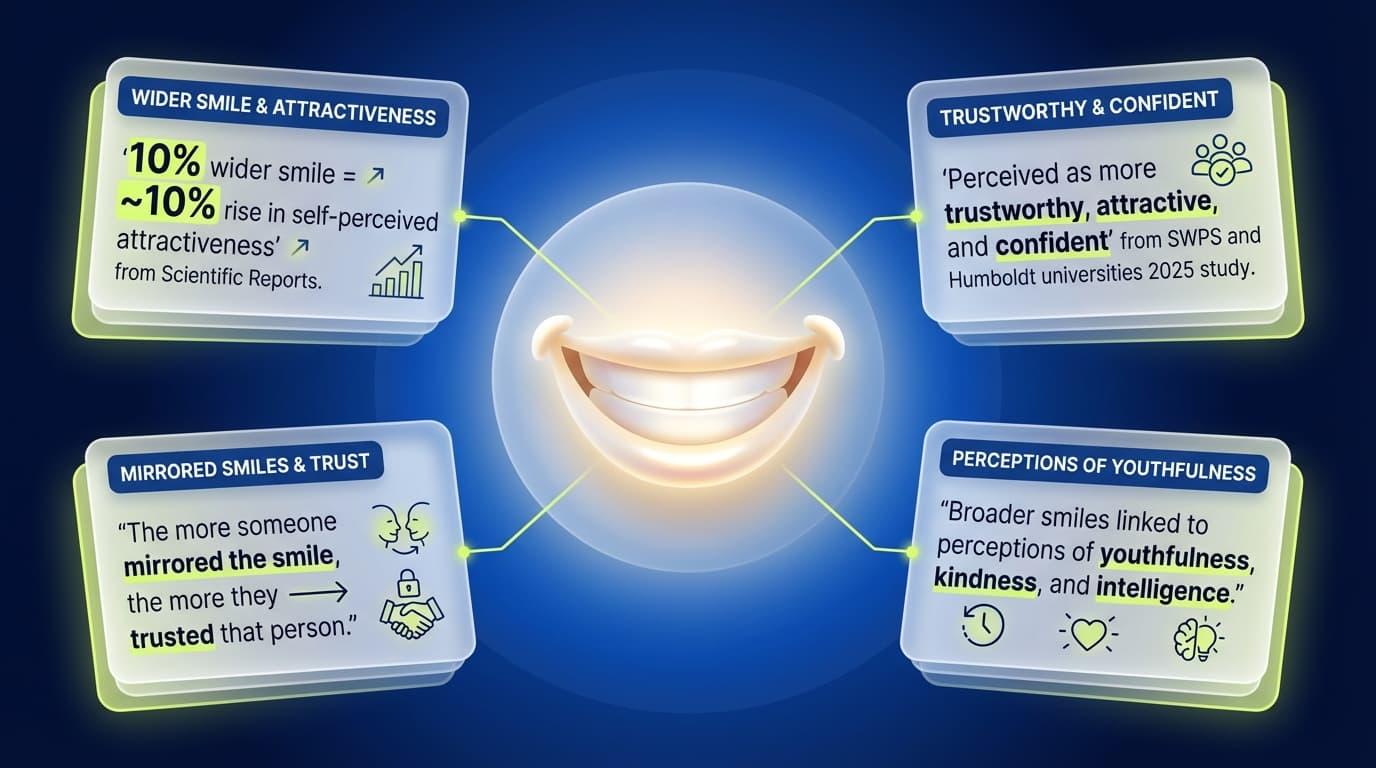
A visibly bright, stain-free smile functions as a primary non-verbal signal of competence in professional and social settings.
Just as structured attire signals preparedness, consistent teeth whitening removes distracting enamel stains, allowing individuals to engage in conversations without self-consciousness.
This continuous aesthetic readiness provides a daily return on investment by eliminating the urge to hide one's smile during client meetings or family photos.
The psychology is backed by real research. A 2025 study from SWPS and Humboldt universities found that people judged smiling individuals as more attractive, trustworthy, and confident based on short video clips alone. The more someone involuntarily mirrored the smile, the more they trusted that person. A confident smile leads to trust. Trust leads to opportunity.
Research published in Scientific Reports found that for every 10% increase in smile width, self-perceived attractiveness rose by about 10%. Broader smiles were also linked to perceptions of youthfulness, kindness, and intelligence.
We know this is not just about vanity. A lot of people tell us they have learned to smile with their lips closed after years of coffee, tea, and red wine staining their lips. You develop a whole routine: tilting your chin, controlling your expression, avoiding certain angles in family photos.
Consistent whitening creates permission to smile fully. No second-guessing the photo your colleague just posted. No muting yourself on a Zoom call to avoid the freeze-frame.
Picture walking into your next big presentation or a twenty-year reunion feeling like your radiant smile matches the rest of your polished look. First impressions compound.
A great handbag upgrades your outfit. A whiter smile upgrades every interaction.
How to Choose Your “Signature” Whitening Kit
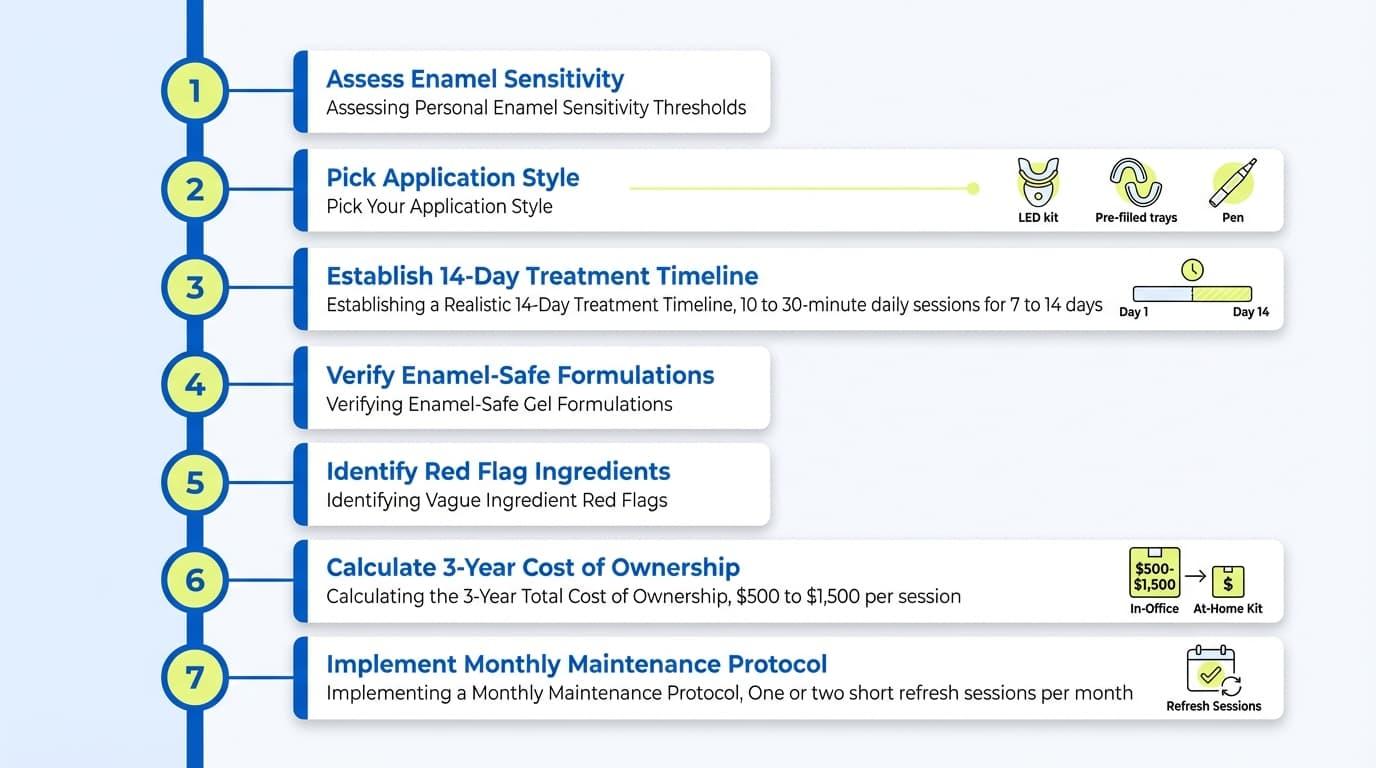
We have found that the people who get the best results treat their whitening kit like any other investment. They think it through once, and then they stick with it. Here is how to do that.
Step 1: Assessing Personal Enamel Sensitivity Thresholds
If you have had sensitive reactions to past whitening treatments, start at the lower end and work up. Many kits include multiple gel strengths for exactly this reason.
Step 2: Pick Your Application Style
LED kits with proper trays generally deliver the best results for tackling both surface stains and intrinsic stains across all visible teeth.

Step 3: Establishing a Realistic 14-Day Treatment Timeline
Most effective at-home kits require 10 to 30-minute daily sessions for 7 to 14 days at first, followed by monthly touch-ups to maintain results. Compared to scheduling in-office treatments, this is far more flexible. But consistent use is what gets you there.
Step 4: Verifying Enamel-Safe Gel Formulations
Look for active ingredients at clearly disclosed percentages, enamel-supportive additives, instructions that carefully explain application and frequency, and any evidence of clinical testing.
Step 5: Identifying Vague Ingredient Red Flags
Be cautious of products with vague ingredient lists, unverifiable claims about extremely high peroxide percentages for home use, or promises of noticeably brighter results in just a few days with no maintenance plan.
Step 6: Calculating the 3-Year Total Cost of Ownership
If you are comfortable spending $250 on a bag you will carry every day for three years, a similar amount for a whitening system you will use for years makes sense. In-office treatments can cost $500 to $1,500 per session. At-home whitening kits for consistent maintenance are a practical complement to professional teeth whitening when needed.
Step 7: Implementing a Monthly Maintenance Protocol
A realistic pattern looks like this: a full course when you first get the kit, then one or two short refresh sessions per month, plus targeted touch-ups before big events like weddings, family photos, or important presentations.
Your whitening kit is part of your everyday essentials. Like your skincare, your shoes, and that go-everywhere bag. Your daily maintenance happens at home, and a good kit makes it simple.
Final Thoughts
At SNOW, what we have found is simple: the people with the best whitening results are the ones who stopped treating their smile care like a bargain bin decision and started treating it like the investment it actually is.
You already know how to do this. You do it with bags, with skincare, with the shoes you wear three times a week. The same logic applies here. One good purchase, used consistently, beats ten cheap ones every single time.
A confident smile upgrades every interaction. And you deserve one that holds up as well as your favorite handbag.
Ready to make the switch?
SNOW has helped millions of people build a consistent, effective whitening routine that actually lasts. Whether you want a full LED kit, convenient dissolving strips, or a quick touch-up pen, there is an SNOW option designed for your lifestyle and goals.
Shop SNOW Teeth Whitening Kits and Find Your Fit
Frequently Asked Questions
A lot of people ask us these questions before making the switch. Here are the answers we give every time.
How Long Does A Good At-Home Whitening Kit Actually Last?
The hardware, your LED mouthpiece, trays, and case, can last several years with simple cleaning and proper storage. The only thing you replace is the whitening gel. Most gels remain effective for 12 to 24 months from the date of manufacture, so check the packaging. A realistic routine: a 10 to 14-day initial course, then short touch-ups every few weeks using small amounts. Heavy coffee or red wine drinkers may need more frequent refreshes than those with lighter staining habits.
Are At-Home Whitening Kits As Effective As In-Office Treatments?
In-office whitening with a cosmetic dentist delivers faster, more dramatic results, typically 8 to 10 shades in one session, using high-concentration hydrogen peroxide with professional oversight. That comes with a $500 to $1,500 price tag per visit at most dental offices. High-quality home teeth whitening kits, used consistently, can achieve results similar to those of in-office treatments over time, usually resulting in a 4 to 6 shade improvement.
Will A Whitening Kit Harm My Tooth Enamel?
When used as directed, peroxide-based whitening products do not cause significant long-term harm to healthy teeth, according to clinical research. The most common side effects are mild tooth sensitivity and gum irritation, both of which are temporary and typically resolve within a few days of pausing treatment.
What If I Have Crowns, Veneers, Or Fillings?
Whitening agents work only on natural tooth enamel. They do not lighten ceramic crowns, porcelain veneers, or composite fillings. That means whitening your natural teeth may create a visible shade difference with existing restorations, especially on front teeth. If this applies to you, talk to a cosmetic dentist before you start. The usual approach is to whiten your natural teeth first, then update any restorations to match your new shade if needed. Whitening pens can help with targeted application near transitions, but they cannot change the color of restorations.
How Soon Before A Big Event Should I Start Whitening?
We recommend starting 2 to 4 weeks before a major event, whether that is a wedding, reunion, family photos, or an important presentation. Most home teeth whitening kits show noticeable changes within 4 to 7 days, with full results after 10 to 14 days of consistent use. If you notice sensitivity, stop 2 to 3 days before the event to let it settle, then do one short touch-up 24 to 48 hours before if you feel comfortable. In the final week, limit heavily staining foods and drinks, such as red wine, black coffee, dark sauces, and berries. A whiter smile for your moment is completely achievable with the right timing.


