

Purple whitening strips or a purple whitening pen? Both promise a brighter-looking smile, but nobody wants to spend time on a routine that feels fiddly, uneven, or wrong for the moment. The real difference is not the purple pigment. It is how the product fits your teeth and your day.
Strips cover several visible teeth in one go, making them a smart pick before photos, trips, dates, and big events. A pen gives you more control when one small area is stealing your attention. Both create temporary optical color correction, so think quick visual refresh, not a permanent shade change.
At SNOW, we believe smile prep should feel simple, not like a science project. This guide breaks down coverage, speed, ease, research, and real-life use cases. You will leave knowing which format belongs in your routine and which one can stay on the shelf. No guesswork and no purple overload.
Key Takeaways
-
Want broad, even-looking coverage? Strips have the edge.
-
Need one small touch-up on the go? A pen offers more control.
-
Purple pigment creates temporary optical brightening, not a permanent shade change.
-
SNOW Purple Dissolving Strips skip the awkward peel-off and cleanup step.
-
SNOW Purple Serum works during brushing. It is not a brush-tip pen.
-
The winning format is the one that fits the job, not the one with the flashiest promise.
Purple Whitening Strips vs Purple Whitening Pen at a Glance
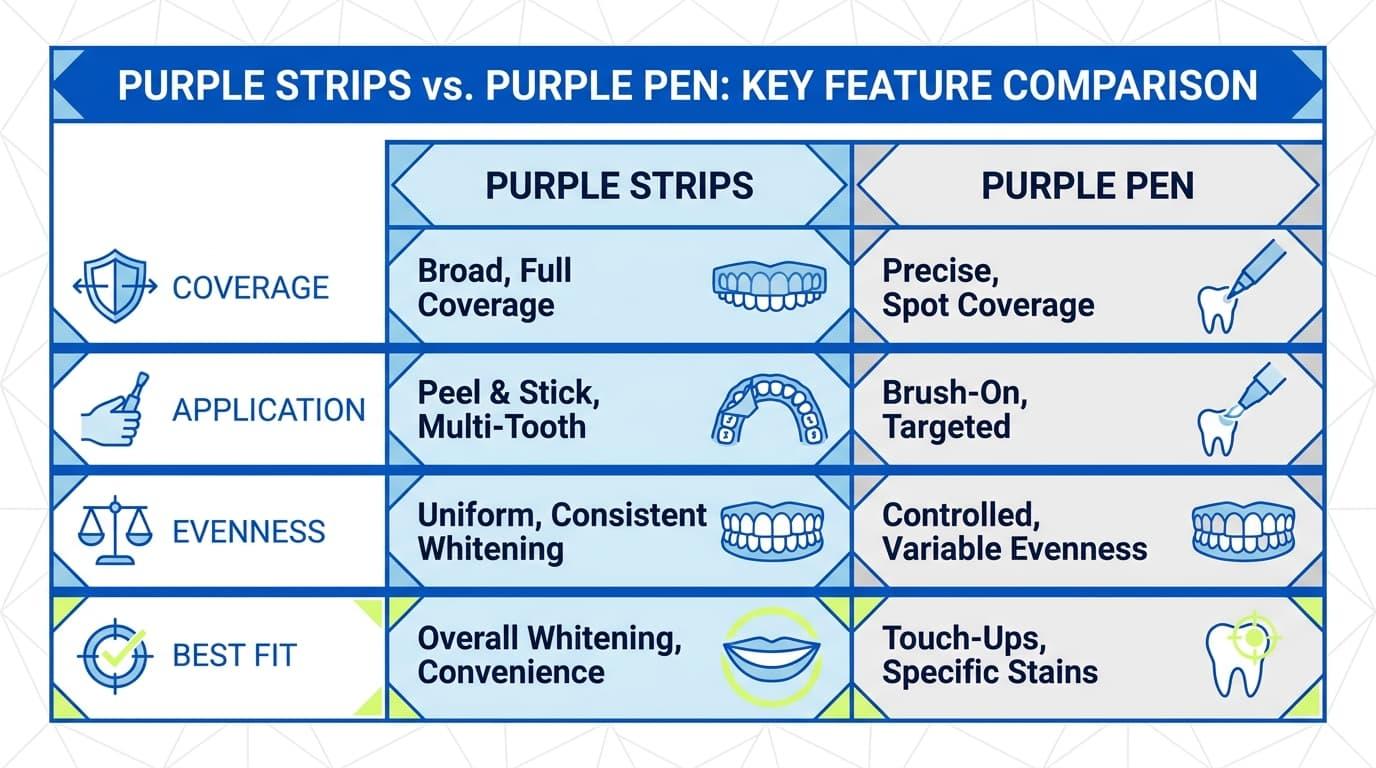
Short on time? This table gives you the answer at a glance. The details below will help you confirm the best fit.
|
Feature |
Purple Strips |
Purple Pen |
|
Coverage |
Several visible teeth at once |
Selected teeth or small areas |
|
Application |
Pre-shaped strip placement |
Brush-on placement |
|
Evenness |
Less dependent on technique |
Depends on careful application |
|
Portability |
Compact, with wear time |
Very compact for touch-ups |
|
Best moment |
Events, photos, and full-smile prep |
Quick, targeted refreshes |
|
Best fit |
Broad cosmetic brightening |
Precision and portability |
Use This 10-Second Decision Rule
Still split between the two? Start with the outcome you want, then choose the tool built for that job. This shortcut keeps the decision simple.
-
Pick strips when several visible teeth need the same attention.
-
Pick a pen when one small spot keeps catching your eye.
-
Pick SNOW Purple Serum when you want color correction built into brushing.
If two situations apply, give the formats separate roles. Use strips for planned full-smile prep and keep precision for true touch-ups. That way, your routine stays useful instead of turning into a crowded bathroom shelf.
What Are Purple Whitening Strips?
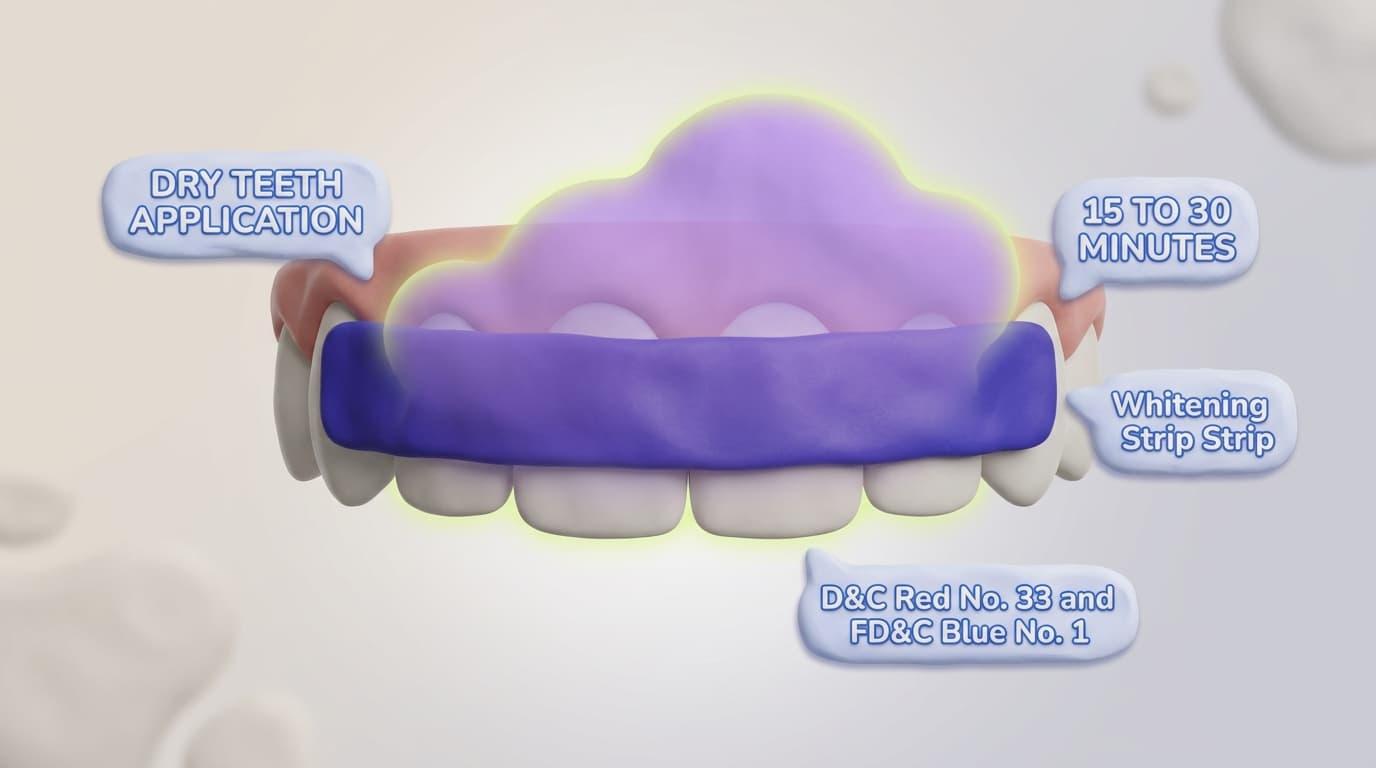
Think of purple strips as a color-correcting filter for your visible smile. The thin strips sit across the front teeth while violet pigment visually balances yellow tones, though some are color-correcting only and dual-action strips combine the violet effect with an active ingredient for whitening. The brighter-looking effect is temporary, not permanent bleaching.
Why Wider Contact Changes the Result
One strip touches several teeth in one placement. Its built-in shape spreads the purple formula across the visible smile, so you are not painting tooth after tooth and hoping the layers match. Purple strips are typically applied to dry teeth and worn for about 15 to 30 minutes, depending on the product.
That wider contact is helpful before a wedding, vacation, presentation, or photo session. It also takes pressure off your technique. If your hand is not steady before your morning coffee, strips are forgiving. The visible purple effect usually comes from colorants such as D&C Red No. 33 and FD&C Blue No. 1 that sit on the tooth surface rather than bleach it.
SNOW’s Purple Dissolving Strips break down during wear, so there is nothing to peel away afterward. Compared with traditional strips, the dissolving format removes the final cleanup step while keeping broad smile contact.
What Is a Purple Whitening Pen?
A purple whitening pen is the detail brush of the category. As a paint-on whitening gel, its small tip places violet pigment on selected teeth, giving you more control than a full strip.
That precision is the appeal. A pen slips into a purse, desk drawer, gym bag, or carry-on and is ready when one or two visible areas are bothering you. Many pens also need about 10 to 30 minutes of drying or wear time, and results can be less predictable because saliva may dilute the layer before the gel contacts the tooth surface. Pen results are often more temporary and less consistent than strip results because coverage depends more on how evenly you apply it.
The Trade-Off Behind Precision
Here is the catch. More control means more work. You need to spread the product carefully and avoid gaps if you want several teeth to look consistent. A rushed paint job may look less even than one well-placed strip.
Treat a pen as a precision tool, not a full-smile shortcut. It shines on small areas but becomes tedious when the whole visible smile needs attention.
SNOW Purple Serum is not a whitening pen. It is a color-correcting serum used with toothpaste during brushing, so it fits naturally into a daily routine instead of a brush-on spot treatment.
How Purple Color Correction Works
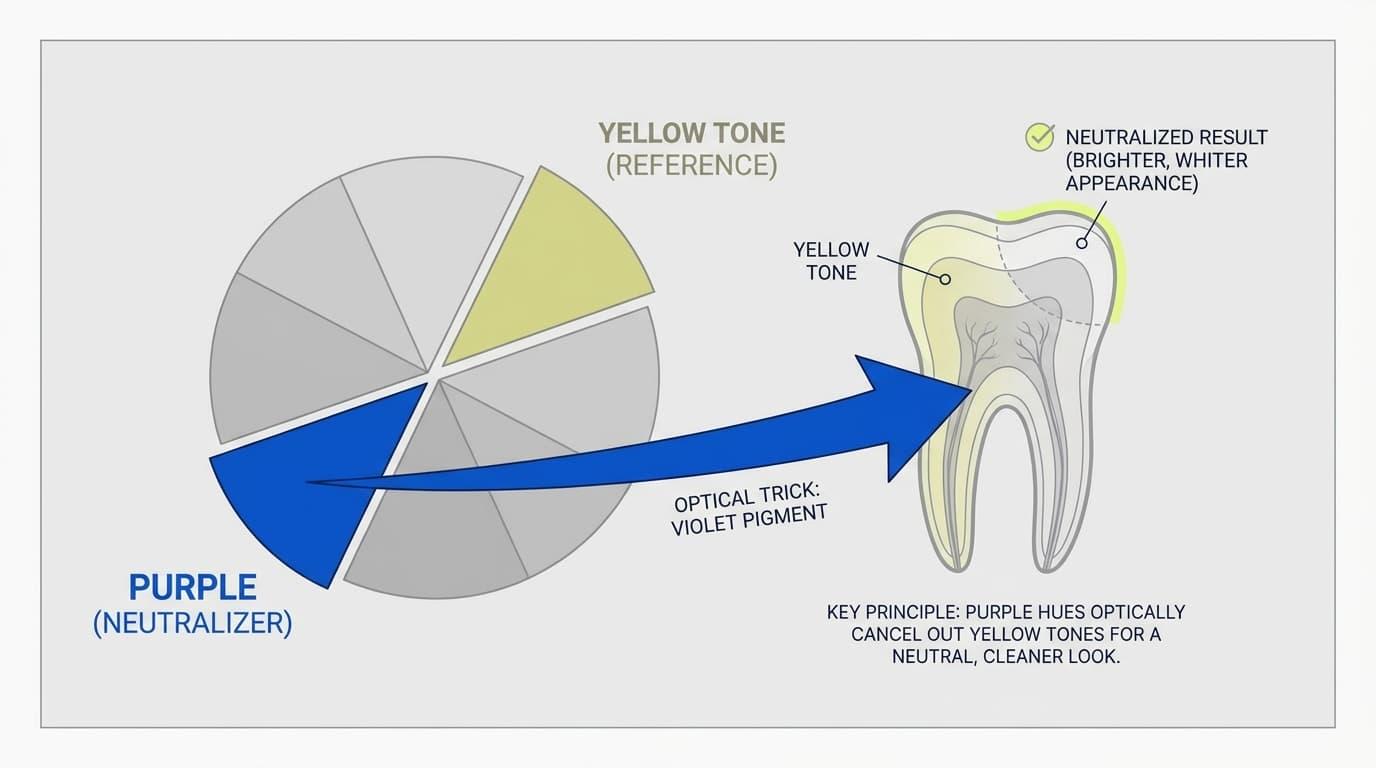
Here is the simple version. Purple is directly opposite yellow on the color wheel. Violet pigment can visually cool yellow tones, helping reduce yellow undertones and making teeth appear brighter for a limited time.
Both formats use that optical trick. They do not create the lasting shade change associated with peroxide whitening. As the pigment wears away, the brightening effect fades. That makes purple products best for a fast visual refresh and can help create the look of whiter teeth.
That means the result is instant color correction and instant brightening, not true stain removal or a lasting immediate brightening effect.
Color correction is most useful when visible yellow stains are the concern. It works best on surface-level yellow undertones, while deeper discoloration is less likely to change much. Your starting shade and type of discoloration can affect how purple whitening works on your smile.
What Research Says About Whitening Format
Now for the research, minus the lab-coat language. The applicator changes where a formula sits and how much work it takes to spread. That alone can create a very different experience. For true whitening treatments, hydrogen peroxide is a common active ingredient in many whitening products, so it helps to check ingredient lists for the active whitening agents rather than judging by format alone.
A Strip Creates a Built-In Contact Layer
A strip brings its own contact layer. Conventional whitening strips also often cover both the top and bottom teeth at the same time and may need about 30 to 60 minutes of wear, which helps explain why contact can matter. A pen puts the coverage map in your hands, so missed spots and thin layers can matter. This gives strips a practical edge for broad application, but it does not prove that every strip beats every pen.
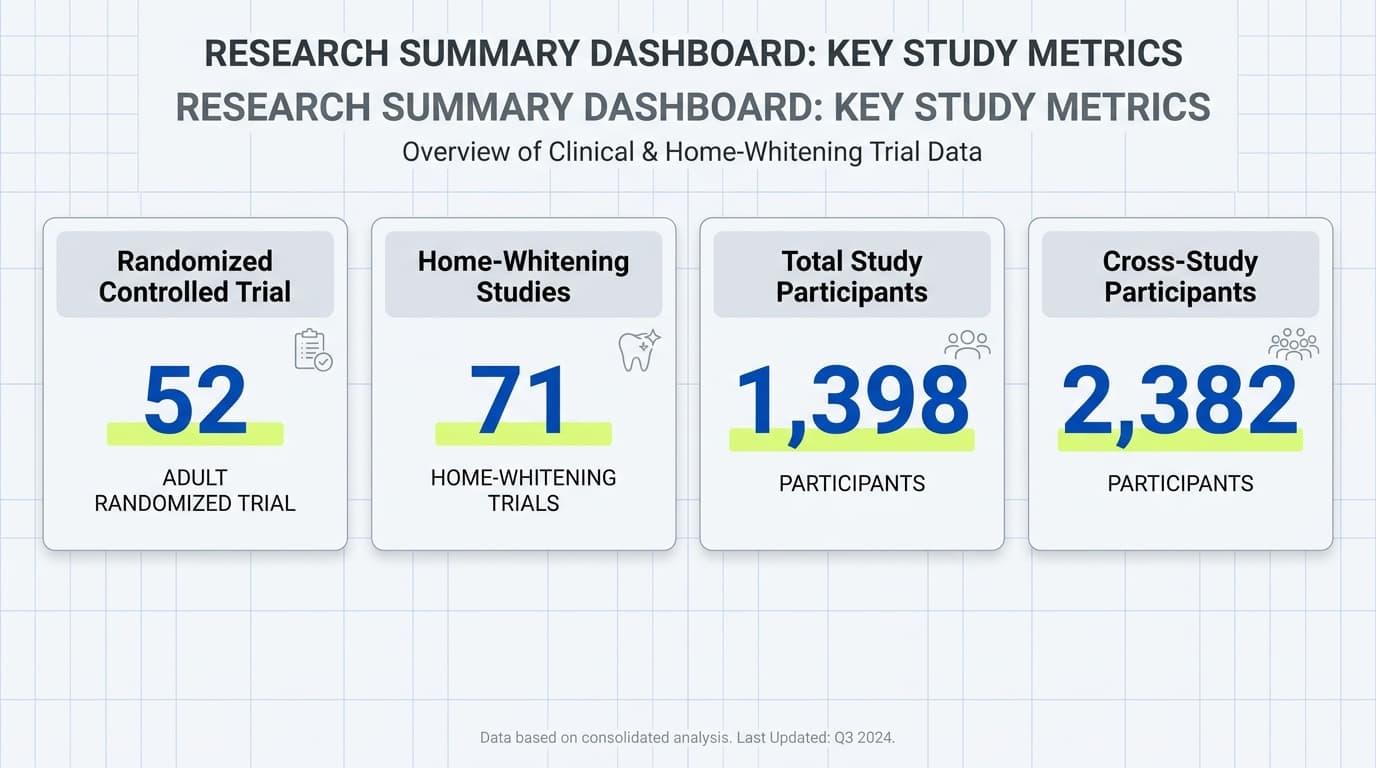
A historical 52-adult randomized trial compared peroxide strips with a paint-on peroxide gel and a control. The strips produced a larger measured change in yellowness and lightness, even though the strip and gel started with similar peroxide levels. The authors noted that the strip barrier and longer surface contact may have helped explain the difference, since peroxide can penetrate enamel and oxidize stain molecules more effectively when it stays in place.
Important reality check: the trial tested peroxide, not purple correction or SNOW products. It does not prove permanent whitening from a purple strip. It simply shows that contact, coverage, and application method can matter.
The Wider Evidence Needs Context
A Cochrane review found 71 home-whitening trials, including 26 placebo-controlled studies with 1,398 participants and 51 active-comparison studies with 2,382 participants. The review found short-term whitening evidence, but rated the overall evidence low or very low because studies varied and often carried risk of bias.
That review examined chemical bleaching products, not violet color correction. It supports a careful takeaway: product category, formula, contact time, and study quality matter. A large evidence count does not turn a finding about peroxide into proof for a purple pigment product.
Why This Matters for Purple Products
Purple strips and purple pens work through temporary color correction rather than the chemical process tested in that trial. Still, the same practical question remains. Can the format place an even layer where you want it? In practice, how purple strips work still depends on whether the formula is only cosmetic color correction or also includes a real whitening active ingredient.
A strip answers that question with a pre-shaped surface. A pen answers it with precision. If your priority is a consistent-looking full smile, the built-in contact layer is usually more useful. If your priority is one small area, the brush tip gives you control a strip cannot match, making each a different whitening method depending on whether you want full-smile coverage or small-area precision.
What Does a Visible Color Difference Mean?
Ever loved a result in the bathroom mirror, then barely noticed it in a photo? Light, surrounding colors, camera settings, moisture, and the viewer can all change what you see. Consistency matters when judging a cosmetic result.
Small Color Changes Can Be Noticeable
Dental researchers often measure color with a system called CIEDE2000. A large multicenter study set the 50:50 perceptibility point at 0.8 color-difference units. In plain language, half of observers could notice a difference at that level under controlled conditions. The same research placed the 50:50 acceptability point at 1.8 units, showing that noticing a difference and judging it acceptable are separate questions.
Those numbers are not a product promise. They show why a small optical shift may still catch the eye. Your smile does not need to jump several shades to look fresher in a photo.
The Eye Is Not a Color Meter
In a study of 600 shade-matching observers, visual agreement with an instrument ranged from 12% to 42% across observer groups, shade guides, and lighting conditions. Dentists achieved the highest agreement, yet even their best result was 42%.
The study measured shade selection, not whitening performance. It still shows why a mirror check can shift with the viewer and room. Keep the light and photo setup consistent when comparing formats.
Brighter-Looking Teeth Can Shape First Impressions
People notice tooth color. In an 180-woman perception study, participants viewed digitally altered images with unmodified, darker, or whitened-looking teeth. The whitened versions received more positive ratings across the personal traits assessed.
The study measured social perception, not product performance, and edited photos are not real-world whitening. It still helps explain why full-smile balance may look more polished than one bright spot beside warmer-looking teeth.
Which Format Gives More Even Coverage?
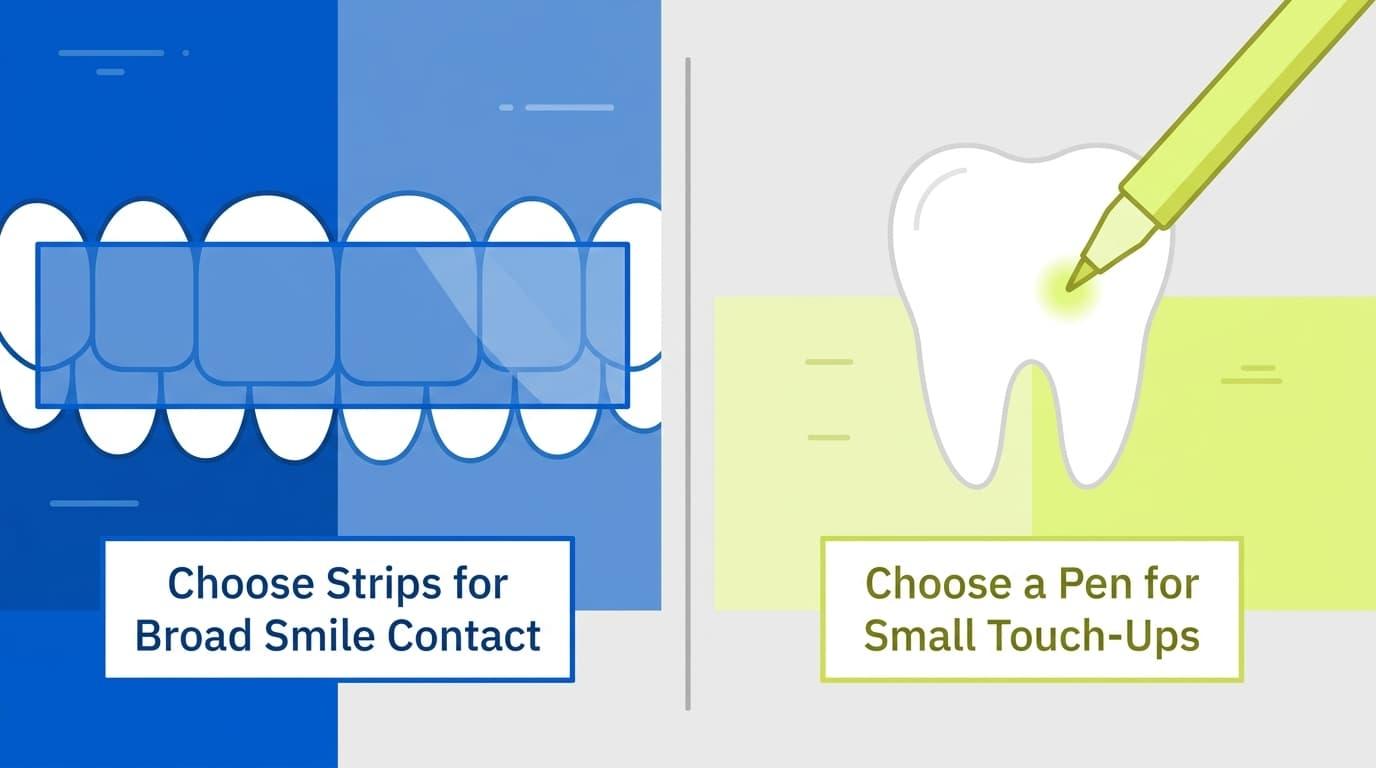
If you remember one thing, make it this: strips spread; pens pinpoint. That coverage difference usually decides the winner, especially when even coverage matters more and you want a visibly brighter smile across the whole front of the mouth.
Choose Strips for Broad Smile Contact
Strips cover several visible teeth at the same time. Their shape helps keep the application consistent across the front of the smile, with less work from you. That makes them the stronger primary format when a balanced look matters, especially if you want to maintain even results as part of a broader whitening routine.
At SNOW, we designed our purple strips to dissolve during wear. There is no final peel or cleanup step, which keeps the routine simple when you are getting ready for an event or heading out the door.
Choose a Pen for Small Touch-Ups
A pen gives you direct control over where the formula goes. That can be useful when one or two visible teeth need attention or when a compact option matters more than broad coverage.
Painting several teeth evenly takes more time and care, so a pen is better viewed as a supporting format than a full-smile shortcut, and it makes more sense for maintaining results between bigger full-smile applications than for replacing them.
Which Format Is Easier to Use?
The easiest format is the one that matches the job. A pre-shaped strip simplifies broad coverage, while a dissolving strip skips the final peel and may also be the easier fit depending on any sensitivity concerns, since some users tolerate one formula or contact style better than another. A pen opens fast for a small touch-up but leaves the amount, placement, and consistency to you. Both travel well, though strips need directed wear time.
Why Photos Can Make Teeth Look Different
Cameras can be dramatic. Light, exposure, lipstick, clothing, and tooth moisture can all shift white and yellow tones. Without a consistent setup, a subtle change can look much larger or smaller than it is.
Dry Teeth Can Look Temporarily Lighter
Tooth moisture matters more than most people expect. A 30-participant dehydration study measured tooth color at baseline and after 10, 20, and 30 minutes of dehydration. After 30 minutes, all tested teeth showed a color difference above the established perceptibility threshold. The researchers then measured the teeth again after rehydration.
This matters when you compare before-and-after photos. Holding the lips away from the teeth, leaving the mouth open, or taking photos at different points in a routine can change moisture. A fair comparison should use the same lighting, angle, camera, distance, and timing.
Use a Simple Before-and-After Setup
You do not need studio equipment. A consistent setup gives you a clearer view of what changed.
-
Take both photos in the same room and at the same time of day.
-
Use the same camera, distance, angle, and exposure settings.
-
Avoid beauty filters, automatic whitening, and edited contrast.
-
Keep lipstick, clothing color, and background as similar as possible.
-
Take the photos at the same point in your oral care routine.
A controlled photo will not replace a professional shade reading, but it can help you judge whether the format created the balanced cosmetic effect you wanted.
How to Get the Best Experience From Either Format
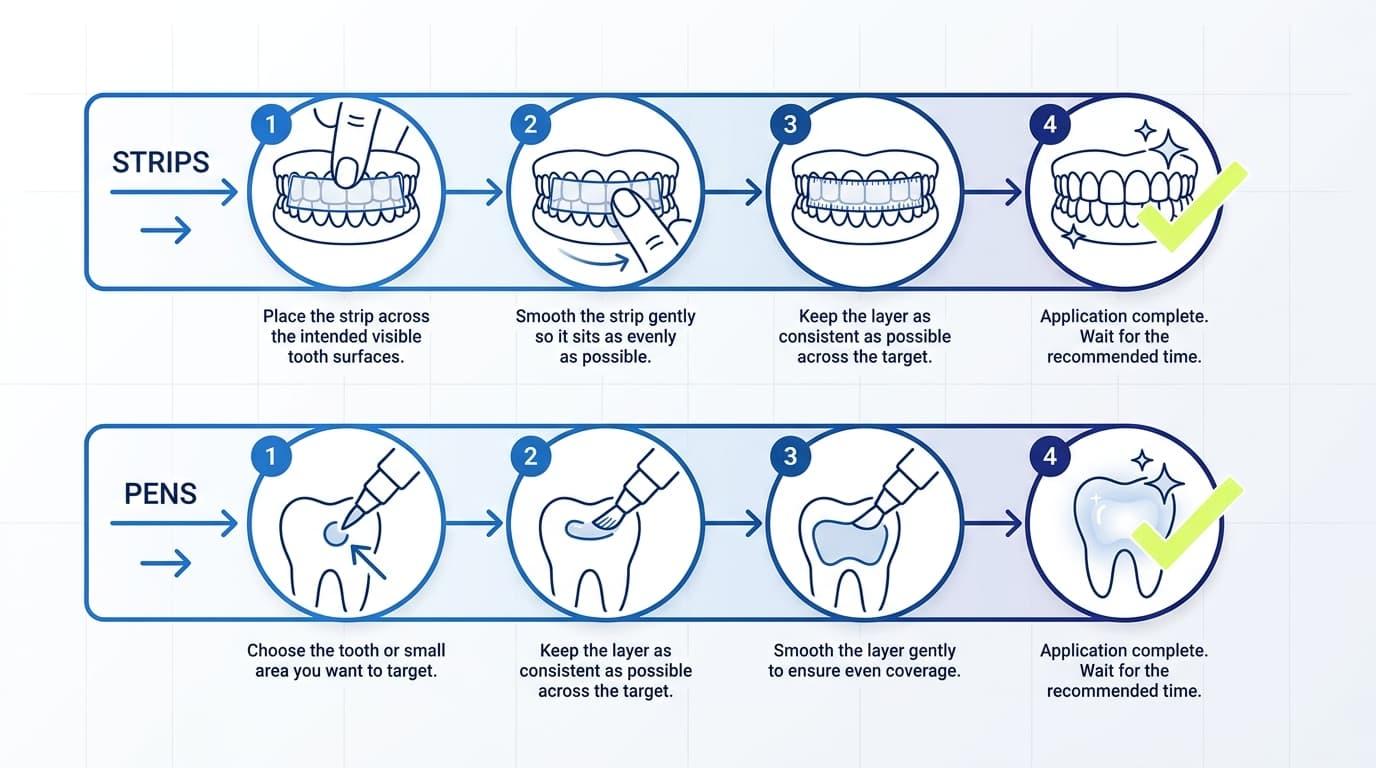
A little technique goes a long way. It will not turn temporary correction into permanent bleaching, but it can support a more even application and help you avoid wasting a session; that also means choosing formulas carefully, such as looking for products with hydroxyapatite when enamel support matters. Always follow the package directions.
Using Purple Whitening Strips
Strips are designed to simplify broad placement, but a rushed application can still leave folds or missed edges. Some strip formulas include potassium nitrate to make the experience more comfortable for people with sensitive teeth, and potassium nitrate is added to some strips to reduce sensitivity. Use the package directions as the authority and focus on smooth, consistent contact.
-
Read the label before opening the strip packet.
-
Place the strip across the intended visible tooth surfaces.
-
Smooth the strip gently so it sits as evenly as possible.
-
Leave it in place only for the directed wear period.
-
Complete any after-use step listed on the package.
SNOW Purple Dissolving Strips remove the peel-off step because the material breaks down during wear. That convenience does not mean more is better. Use the product only as directed and give the format time to work as intended.
Using a Purple Whitening Pen
A pen requires more control because you decide where the pigment goes. The goal is a thin, even application on the selected area, not a heavy layer that spreads beyond it.
-
Review the product directions and any preparation steps.
-
Choose the tooth or small area you want to target.
-
Apply a controlled amount instead of overloading the brush.
-
Keep the layer as consistent as possible across the target.
-
Follow the directed drying, wear, and after-use instructions.
If you find yourself painting several teeth one by one, the pen may no longer be the easier format. That is the point where a strip can save time and reduce the technique needed for broad coverage.
Using SNOW Purple Serum
SNOW Purple Serum belongs in the brushing category. Use it with toothpaste as directed on the product packaging, as a whitening toothpaste companion rather than a brush-on pen substitute. This distinction keeps the routine accurate and helps shoppers choose it for the right reason.
The serum makes sense when you want purple color correction built into a familiar habit. It does not replace the precise applicator of a pen or the broad contact layer of a strip. It gives you a separate everyday format within the same cosmetic color-correcting category.
What Purple Strips and Pens Cannot Do
Purple products can do a neat visual trick, but they are not magic wands. The pigment can balance visible yellow tones for a limited time. It cannot permanently change your natural tooth shade. If you want more than temporary color correction, compare other whitening options, including professional treatment, and prioritize products with the ADA Seal of Acceptance, which indicates proven safety and effectiveness when available.
They also cannot recolor crowns, veneers, fillings, or bonding. Because dental work keeps its color, a cosmetic shift on nearby natural teeth may make an existing mismatch more noticeable, and it does not change the underlying tooth structure or help you reach a specific desired shade.
Deep discoloration, a single tooth that changes color, pain, swelling, or a sudden shade change may call for professional whitening, not another cosmetic layer. A whitening product can change appearance, but it cannot diagnose the reason a tooth looks different.
Choose the Format That Fits Your Smile
For most full-smile moments, purple strips take the crown. Their pre-shaped design covers several visible teeth at once and asks less of your technique. Compared with peroxide-based whitening, their whitening effectiveness is more about visual color correction than long-term stain removal, and higher peroxide concentrations can raise tooth sensitivity. Hydrogen peroxide can also cause temporary sensitivity, and gum irritation can happen when whitening gels contact soft tissue, especially with overuse; over time, repeated use of strong strips can make that discomfort more likely.
The pen is not going home empty-handed. It wins for portability and focused touch-ups. SNOW Purple Serum offers a third route during brushing, but it is not a pen.
At SNOW, we have shipped more than 100 million treatments worldwide, and our products come with a 60-day money-back guarantee. Those proof points can make trying a new format feel less intimidating, especially if past whitening routines have disappointed you.
If you want a simple place to start, our Purple Dissolving Strips deliver color-correcting coverage without a peel-off step. They make the most sense when your goal is a brighter-looking full smile with less application fuss. They are the better pick when you want an instantly brighter appearance that can help your smile bright for about 60 minutes to a few hours, not permanent whitening results or a forever brighter smile.
Purple Whitening Strips and Pens FAQs
Still deciding between strips and a pen? These quick answers can help.
Do Purple Whitening Strips Work Better Than a Pen?
Purple whitening strips usually work better for broad, even-looking coverage because they sit across several visible teeth at once. They also tend to deliver more consistent whitening results because they maintain broader, more even contact with the teeth than a pen does. A pen gives you more control over a small area but requires careful placement. The better format depends on whether you want full-smile cosmetic brightening or a precise touch-up.
Is a Purple Whitening Pen Better for Travel?
A pen is very portable and can be convenient for a small touch-up away from home. Strips are also compact, but they require wear time. If travel convenience is your top priority, choose a pen for precision or dissolving strips when you want broader coverage without a removal step.
How Long Does Purple Color Correction Last?
Purple color correction is temporary because it changes how yellow tones look rather than permanently changing tooth color. The visible effect fades as the pigment wears away. Timing can vary based on the formula, use, food, drinks, and your starting shade, so follow the product directions for the best cosmetic result.
Can a Purple Pen Cover the Full Smile?
You can apply a pen across several visible teeth, but doing so evenly takes patience and a steady technique. A missed spot or uneven layer can affect the final look. For broad coverage, a pre-shaped strip is usually simpler. A pen is most useful when you want targeted placement, and while it can help with touch-ups as part of a full whitening routine, it is not the most efficient route to comparable whitening results across the whole smile.


