

A complete whitening stack is a layered protocol using compatible products from a single brand—such as desensitizers, active peroxides, and remineralizing agents—to ensure chemical harmony. This unified approach prevents the pH imbalances and ingredient clashes common with mixed routines, ensuring safer, more consistent results.
This unified approach prevents the pH imbalances and ingredient clashes common with mixed routines, ensuring safer, more consistent, and longer-lasting results.
Key Takeaways
-
A complete whitening stack combines in-office and at-home teeth whitening products from the same brand for predictable, consistent results
-
Professional in-office treatments typically utilize hydrogen peroxide (HP) concentrations of 35-38% for rapid oxidation, while at-home systems rely on carbamide peroxide (CP) at 10-16%, which a 2024 systematic review identifies as the 'gold standard' for balancing efficacy with safety.
-
Desensitizing agents should be integrated before, during, and after whitening to minimize discomfort
-
Single-brand systems eliminate product incompatibility and reduce complications
-
A structured stack includes pre-treatment prep, active whitening agents, sensitivity management, and long-term maintenance for lasting results
Why Do Whitening Routines Fail Without a Unified System?
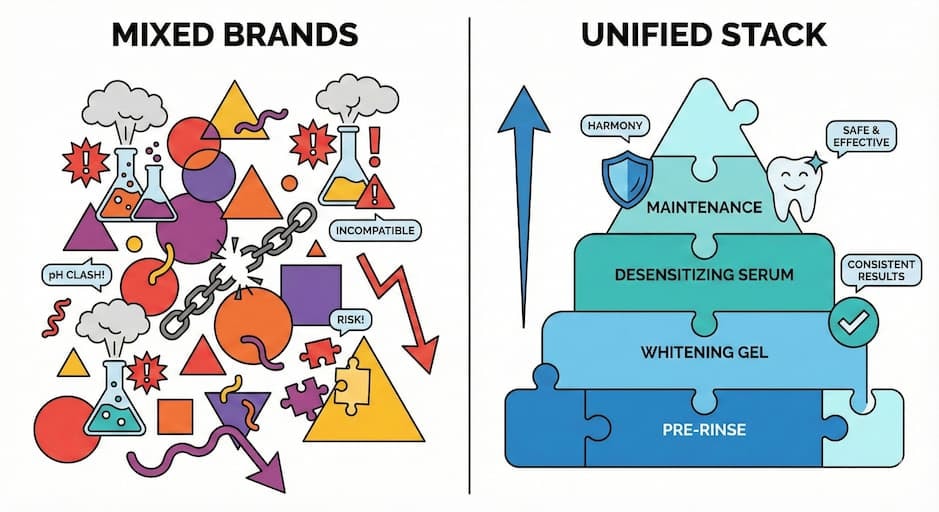
When it comes to building a complete whitening stack using one brand's products, many consumers and even dental professionals mistakenly approach whitening as a one-size-fits-all solution. But scattered products and inconsistent routines often lead to frustration.
Below, we break down the most common reasons these routines fail—and why aligning your system under one trusted brand makes all the difference.
1. Product Incompatibility Disrupts the Whitening Process
Mixing whitening products from multiple brands creates a high risk of formulation clashes due to incompatible pH levels and stabilizing agents.
According to a 2022 warning from the American Dental Association, indiscriminate use of mixed OTC whiteners can lead to soft tissue burns and gingival inflammation because the pH of one product may destabilize the buffer of another.
By using a unified system, users ensure that the acidity of the pre-rinse matches the stability requirements of the bleaching gel, preventing painful chemical reactions. Without coordination, you're gambling with your oral health and whitening outcomes.
This is especially important in professional settings, where dental professionals adhere to strict safety protocols and expect regulatory compliance across treatments. A unified system eliminates unpredictability, making it easier for both practitioners and customers to trust the process.
2. Sensitivity Worsens Without a Desensitizing Strategy
A significant cause of treatment dropout is sensitivity. When skincare products are created for sensitive skin, they follow soothing protocols. Teeth deserve the same care.
In whitening, desensitizers must be planned and layered, before, during, and after treatments. Single-brand whitening stacks are formulated with sensitivity in mind, using compatible fluoride or potassium nitrate solutions built into the protocol.
When consumers layer incompatible treatments without this structure, they risk discomfort that affects their willingness to continue. Expert supervision helps, but so does using a system already designed with desensitization at its core.
3. Inconsistent Results Frustrate Consumers
Patients demand visible shade improvement, but mixing incompatible formulations often results in patchy oxidation and rapid color relapse.
One strip may work well, while toothpaste can cause uneven fading or unpredictable shifts in tooth stains.
This inconsistency erodes brand trust and often leads to negative reviews, hurting brand positioning in both dental and retail markets. With a complete whitening stack, each stage supports the next, delivering uniform whitening across the tooth surface and reducing the need for retreatment.
4. Lack of Maintenance Leads to Rapid Relapse
Effective whitening requires a continuous maintenance sequence rather than a single event. Without dedicated maintenance products such as whitening toothpaste, fluoride mouthwash, or booster treatments, teeth stains can return quickly. When customers don’t follow up with daily care, they undo the progress of professional or at-home treatments.
Unified whitening brands design systems that include post-treatment care. These allow consumers to maintain their brighter smile without needing to guess which maintenance products are safe, effective, or worth buying.
5. Mixed Instructions Create User Confusion
One of the most overlooked reasons for failed whitening routines is confusion about application times, usage frequency, and duration. Combining them from different sources leads to conflicting directions, making it hard for both dental hygienists and at-home users to know what’s safe.
This confusion can lead to skipped steps or overuse, increasing sensitivity and reducing whitening effectiveness. When you follow a single system, instructions are consistent across all products, simplifying the experience and boosting user confidence.
6. No Built-In Safety Protocols Between Brands
Dental professionals rely on safety protocols to protect patient health. Whitening treatments must be formulated to prevent enamel erosion, soft tissue burns, or chemical imbalances in the mouth. When products are mixed between brands, those protocols break down.
Trusted brands invest in regulatory compliance testing and ensure all components, gels, trays, and serums can be used safely together. Consumers who piece together treatments from random sources often overlook this critical aspect, risking long-term oral health for short-term results.
7. Poor Brand Synergy Undermines Identity
In today’s competitive wellness market, both skincare and oral care brands are expected to provide a cohesive experience. Mixing whitening products from unrelated companies dilutes each brand's unique identity and prevents any of them from establishing deep trust with the target audience.
Whether you're a dental office building a whitening package or a skincare brand expanding into oral care, brand synergy matters. Customers are more likely to stay with a brand that delivers consistency, trust, and measurable results across all touchpoints.
8. Results Don’t Match the Lifestyle
For many consumers, teeth whitening is part of a broader self-care routine that includes skincare, hair care, and nutrition. When whitening products don't align with a user’s lifestyle or schedule, they get set aside. This is especially true when treatments require complex instructions or too many steps from different brands.
A complete whitening stack from one brand fits seamlessly into daily life. It aligns with modern routines, quick, effective, and easy to follow, while still providing professional-level results. When a brand builds that kind of trust, it earns long-term loyalty and better reviews.
9. Increased Cost from Trial and Error
Every failed whitening experiment costs time and money. When customers try one whitening strip here, a toothpaste there, and a light kit from another brand, they often end up wasting more than they would have by investing in a complete, science-backed system from the start.
For dental professionals and skincare-focused companies branching into oral health, offering a single, comprehensive solution is also more profitable and brand-building. It reduces returns, increases satisfaction, and allows clearer marketing with a focused message.
What Are the Core Components of a Whitening Stack?
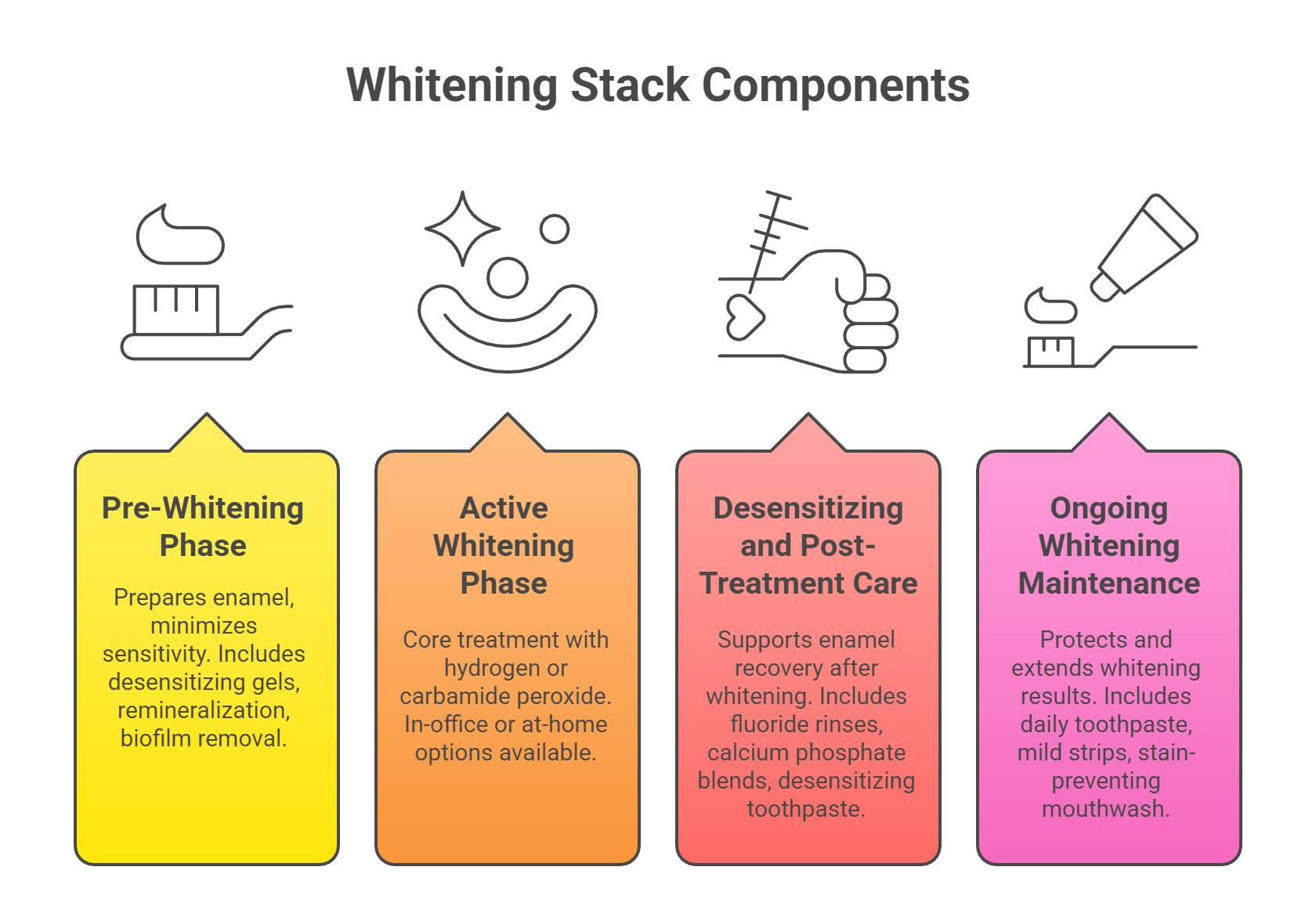
Creating a complete whitening stack using one brand's products means more than pairing a few whitening items. It’s about building a layered, science-backed protocol that addresses every phase of the whitening journey, from preparation to long-term care, while minimizing risk and maximizing results.
Here’s a breakdown of the essential components that dental professionals and skincare-savvy consumers should look for:
1. Pre-Whitening Phase: Sensitivity and Enamel Prep
The pre-whitening phase prepares the enamel surface to withstand oxidative stress while minimizing dentinal hypersensitivity.
A 2025 study in Interfaces Científicas confirms that applying 5% potassium nitrate prior to bleaching significantly reduces pain scores during the procedure.
This preparation phase must include:
-
Desensitizing Gels: Applying potassium nitrate or fluoride to block nerve transmission.
-
Remineralization: Using hydroxyapatite to strengthen enamel micro-hardness before exposure to peroxide.
-
Biofilm Removal: Professional cleaning to ensure the whitening agent contacts the enamel directly.
2. Active Whitening Phase: In-Office or At-Home Whitening Agents
This is the core treatment phase and typically includes:
-
Professional hydrogen peroxide treatments between 15 and 35 percent applied in-office under expert supervision
-
Carbamide peroxide take-home trays with 10 to 22 percent strength for extended whitening
-
Whitening strips or pens that use the same core formulas for consistency
Using whitening products from a single brand ensures all ingredients are chemically compatible. This helps reduce irritation, enhances whitening uniformity, and allows better control over outcomes, whether using light-activated gels or traditional delivery systems.
3. Desensitizing and Post-Treatment Care
After active whitening, teeth are more porous and often sensitive. Post-treatment care supports enamel recovery and includes:
-
Fluoride rinses or gels to reinforce mineral strength
-
Calcium phosphate blends to accelerate remineralization
-
Desensitizing toothpaste that soothes nerve endings
These help stabilize results and maintain comfort. Mismatched products from different brands can neutralize each other or lead to inconsistent recovery, but single-brand stacks are designed to work together without interference.
4. Ongoing Whitening Maintenance
Whitening is not a one-time event. Maintenance products are critical to protecting and extending results and typically include:
-
Daily whitening toothpaste to preserve brightness
-
Mild whitening strips or touch-up pens for monthly refreshers
-
Stain-preventing mouthwash to guard against everyday exposure to wine, coffee, or tea
In a coordinated whitening stack, these products are formulated for long-term safety. They support the effects of prior treatments and help consumers maintain a bright smile without compromising enamel health.
Why Is It Safer to Use a Single Brand for Whitening?
Now that you understand the core components of a whitening stack, it’s time to explore why sticking to one brand is more than just convenient.
Ensures Product Compatibility and Safety
When whitening products come from different brands, you're combining multiple ingredient formulas that were never designed to interact. This increases the risk of chemical conflict, reduced effectiveness, or even irritation.
Using a unified system removes these risks. Each product in the line is developed with ingredient harmony, matched pH levels, and delivery formats that are clinically tested to work together. This ensures safety protocols are maintained at every step, reducing the risk of enamel damage or post-treatment sensitivity.
For dental professionals, this compatibility improves patient outcomes while minimizing complications and liability. For everyday consumers, it removes the guesswork from their whitening routine.
Aligns with Regulatory Compliance and Clinical Research
When you use whitening products from a single brand, you're relying on a system that has already passed internal quality checks and clinical validations, and often meets regulatory compliance standards as a unit.
Many top-tier brands test their complete systems, not just individual formulas. This is particularly important for products used under expert supervision in professional settings. It ensures the system has been evaluated as a whole, something mixed-product routines cannot guarantee.
Whether you're a provider or a patient, this gives you confidence that your whitening results are not only practical but also safe and well-documented.
Strengthens Brand Positioning and Unique Identity
In both the dental and skincare products industries, consumers now look for more than results. They want a consistent brand experience. A coordinated whitening stack helps practices and providers position themselves as high-end, trustworthy, and consistent.
If your clinic offers whitening with a mix of generic products, it lacks cohesion. But when you offer a branded experience, whether it's GLO, Opalescence, or SNOW, you deliver not just results but a unique identity your clients can trust and remember.
This is especially important for skincare brands expanding into oral care or dental professionals looking to elevate their practice's marketing and reputation.
Supports Personalized Whitening Without Compromising Safety
When all whitening products come from a single brand, it's easier to customize treatment protocols based on tooth sensitivity, lifestyle, or the type of tooth stains involved. You can choose higher peroxide concentrations for stubborn cases or gentler carbamide peroxide options for sensitive patients without risking ingredient clashes.
This is difficult with mix-and-match products. You might accidentally pair a strong peroxide with an abrasive toothpaste or a desensitizer that blocks whitening action.
A single-brand stack allows true personalization with complete expert control, whether you're a dentist creating a plan or a customer following a guided whitening routine.
Builds Consumer Trust and Retention
Lastly, using a single brand creates a simpler, more reliable routine that leads to better results and higher satisfaction. This consistency encourages customer loyalty because users don’t need to experiment or fear side effects.
When consumers know their products are designed to work together and see visible results, they're far more likely to stick with the system and recommend it to others. That trust is hard to build when product experiences are fragmented.
How Do Professional In-Office Treatments Set the Foundation?
In-office whitening is where the most dramatic and immediate changes happen. When performed under expert supervision, it initiates the whitening journey with maximum effectiveness and safety.
High-Concentration Gels for Immediate Results
Professional whitening systems typically use hydrogen peroxide concentrations ranging from 15% to 35%. These high-strength gels are powerful enough to lift deep stains embedded in enamel and dentin within a single session.
Because of their potency, these products require precise application and protection of surrounding tissues. This is why expert supervision by trained dental professionals is non-negotiable.
When these gels are part of a single-brand system, they’re calibrated to pair perfectly with post-treatment care and at-home follow-ups, reducing the risk of irritation or uneven results.
Light-Activated Systems: Accelerated Whitening
Some professional systems use light or heat to accelerate whitening. This approach combines specially formulated gels with LED or laser devices designed to activate whitening ingredients more quickly.
These light-reactive gels contain unique ingredients, such as photosensitizers, that respond to specific wavelengths. The result is a faster breakdown of stain molecules and more noticeable whitening during chairside treatment.
When paired with post-care products from the same brand, the entire process stays within safe pH and ingredient limits, reducing sensitivity and enhancing long-term results.
Barrier Materials and Gum Protection
To protect the gums and other soft tissues during high-concentration treatments, barrier gels or rubber dams are applied around the teeth. These isolation materials must be chemically compatible with the whitening gel to prevent chemical interaction.
Using isolation products from the same manufacturer ensures consistent performance and eliminates the risk of unexpected reactions that can occur when mixing components from different brands.
This compatibility also helps maintain optimal contact between the whitening gel and enamel while minimizing risk to surrounding tissue.
In-Office Desensitizers for Enhanced Comfort
Many single-brand whitening systems include in-office desensitizing treatments that are applied before or after whitening. These contain potassium nitrate, fluoride, or other soothing ingredients that calm the nerves within the teeth and reduce post-treatment discomfort.
Generic desensitizers may not be compatible with the chemistry of specific whitening gels, but brand-matched options are designed to support, rather than interfere with, whitening performance.
For dental professionals, this level of control allows for a customized experience that balances speed, comfort, and results.
Which At-Home Components Best Sustain Whitening Results?
Once professional whitening lays the foundation, Snow’s at-home lineup plays a critical role in preserving results and preventing relapse. Using products from one brand ensures every step is chemically compatible and reinforces both cosmetic and health-focused goals.
This strategy is ideal for users who want long-lasting whitening without increased sensitivity, unnecessary guesswork, or overlapping ingredients that can cancel each other out.
Custom Tray Whitening and Overnight Serums
Custom trays and overnight whitening formulas remain some of the most effective at-home methods when used correctly. Snow’s DiamondSeries® Overnight Whitening Serum is formulated with a powerful blend of carbamide peroxide, hydrogen peroxide, hydroxyapatite, and potassium nitrate, making it a proper 3-in-1 solution.
-
Carbamide peroxide offers extended-release whitening, ideal for overnight use
-
Hydrogen peroxide delivers faster stain breakdown
-
Hydroxyapatite helps restore and protect enamel after active whitening
-
Potassium nitrate targets nerve endings to reduce sensitivity
Together, these ingredients work in harmony to whiten teeth, reinforce enamel, and reduce the discomfort often associated with bleaching agents. Using this serum in a custom tray or as part of a nighttime routine helps remove stains more deeply and maintain longer-lasting brightness.
Try the DiamondSeries® Overnight Whitening Serum
Dissolving Whitening Strips for Daily Use
For those who prefer convenience, Snow’s DiamondSeries® Dissolving Whitening Strips offer a hands-free, enamel-friendly solution. Unlike traditional strips that must be peeled and discarded, these innovative dissolving strips vanish in the mouth, releasing whitening agents slowly and evenly.
-
Hydroxyapatite supports enamel strength throughout the process
-
Designed for zero mess and maximum comfort
-
Ideal for use during travel, at work, or multitasking at home
Their portability and ease of use make them a perfect addition to a complete whitening stack. Because they follow the same chemical logic as Snow’s in-office and serum treatments, they help maintain consistency in results without risking overexposure to harsh ingredients.
Try DiamondSeries® Whitening Strips
Whitening Pens for Fast Spot Treatments
Not all stains require full treatments. That’s where Snow’s Extra-Strength Whitening Gold Serum Pen becomes invaluable. Designed for precise application, this dual-peroxide pen targets high-risk areas such as incisor edges, wine-stained grooves, and coffee-stained spots.
-
Dual-peroxide blend delivers rapid action against tough stains
-
Compact and travel-ready for events, photoshoots, or emergency fixes
-
Compatible with Snow’s complete whitening system to avoid overlap or irritation
Whether you’re correcting uneven shading or adding a final touch before a special event, this pen works quickly and safely, delivering noticeable results without discomfort.
Get the Extra-Strength Whitening Gold Serum Pen
Booster Powders for Daily Use
If you already have a favorite toothpaste but want to enhance it without starting from scratch, Snow’s Magic Whitening Toothpaste Booster Powders offer an innovative solution. These daily-use additives boost whitening power and protect enamel with targeted mineral delivery.
-
Original Magic Powder removes stains while remineralizing enamel
-
Purple Magic Powder includes color-correcting technology to offset yellow tones instantly
-
Both contain hydroxyapatite and xylitol for protective and whitening benefits
Just sprinkle or dip to add whitening power to any toothpaste, instantly improving its performance without harsh abrasives. These boosters integrate into your daily routine with minimal effort and maximum payoff.
Toothpaste and Mouthwash Support
Consistency is key for long-term results. SNOW’s whitening-friendly daily toothpastes and rinse options complete the at-home stack by maintaining enamel strength while delivering gentle stain removal.
-
Fluoride-Free Whitening Toothpaste with Hydroxyapatite supports daily protection and shine without irritation.
-
SNOW Vitamin Toothpaste includes minerals and clean ingredients for sensitive users
-
Purple Serum and Purple Tablets neutralize yellow tones instantly with a tint-correcting formula.
These products help prevent re-staining between intensive treatments and support the health of enamel and gums. They are essential for users who regularly consume wine, coffee, or tea and want to maintain a brighter smile.
Try Snow’s Daily Pastes And Color Correctors
How Should Patients Transition from In-Office to At-Home Care?
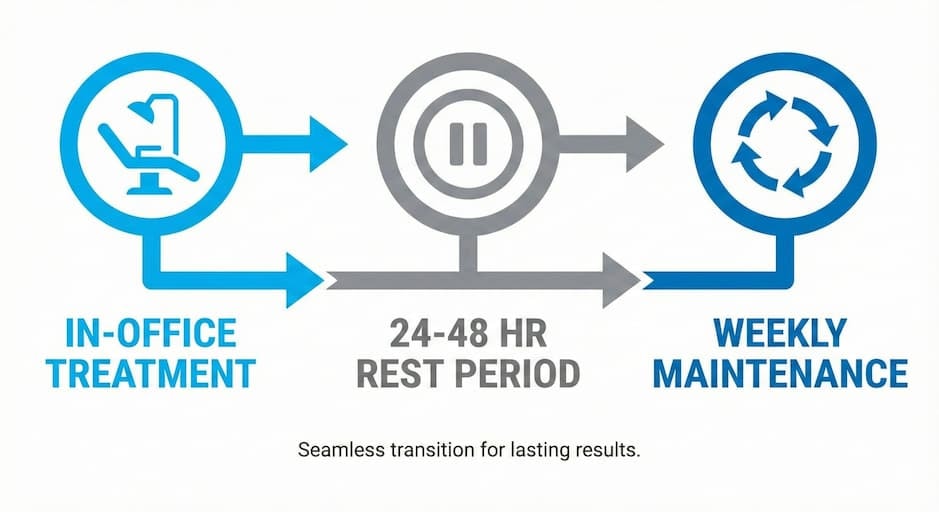
Achieving dramatic whitening results in the dental chair is only the beginning. To protect your investment and extend those results, a seamless transition into a compatible at-home routine is essential. This is where building a complete whitening stack using one brand products becomes especially effective.
Start Maintenance Within 24–48 Hours
After professional whitening, your enamel is more porous and prone to sensitivity. Wait at least 24 hours, then begin a low-abrasive, enamel-supportive home regimen. SNOW’s post-whitening products are specially formulated with hydroxyapatite and potassium nitrate to ease sensitivity while continuing to brighten.
Use Only Brand-Compatible Formulas
Switching to random whitening products can cause interference between ingredients or reduce effectiveness. When you stick to one brand, like SNOW, all your gels, strips, pastes, and boosters share a chemistry designed to work together without causing imbalance or irritation.
Establish a Weekly Touch-Up Rhythm
After initial whitening, you don't need daily treatments — just the right cadence. In our clinical maintenance protocols, we recommend using dissolving strips once weekly to prevent stain accumulation without over-dehydrating the enamel.
Monitor Progress Without Overdoing It
Whitening is not about intensity but consistency. Track shade changes monthly, not daily, and avoid stacking too many products at once. Let your enamel breathe and rebuild in between active whitening sessions.
How Can You Customize a Whitening Stack for Specific Needs?
Every smile is different, which means no single whitening plan fits all. By
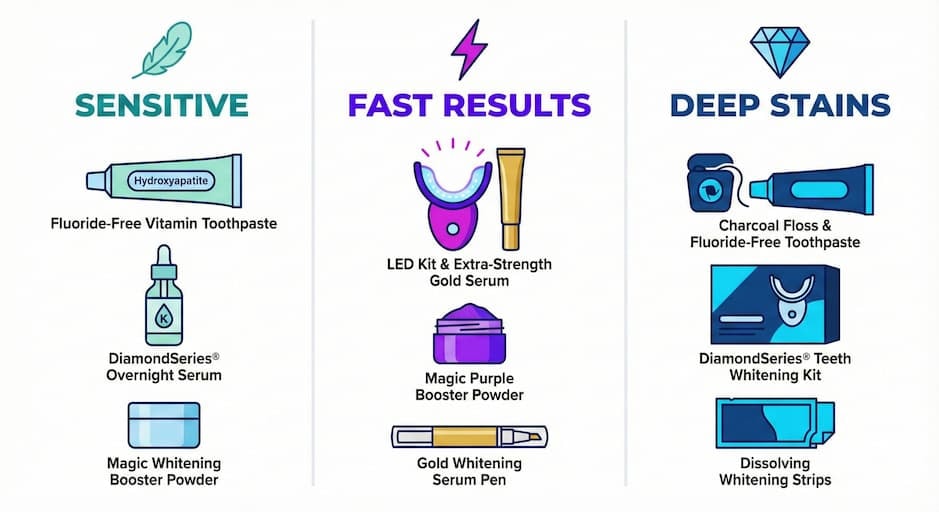
building a complete whitening stack using a single brand's products, you can tailor each step to specific goals, sensitivities, and lifestyles. Whether you're looking for rapid results, gentle care for sensitive skin, or heavy-duty stain removal, SNOW offers a customized stack to suit your needs.
For Sensitive Teeth
If sensitivity has held you back from whitening before, SNOW's stack for sensitive teeth delivers results without discomfort.
-
Pre-Treatment: Start with SNOW’s Fluoride-Free Vitamin Toothpaste with hydroxyapatite for 7 days to strengthen enamel.
-
Active Whitening: Use the DiamondSeries® Overnight Whitening Serum with potassium nitrate and carbamide peroxide, designed to whiten while soothing.
-
Support: Follow up with the Magic Whitening Toothpaste Booster Powder to maintain brightness with minimal abrasion.
For Fast Results
When time is short but you still want visible changes, SNOW’s stack for speed focuses on intensity and convenience.
-
Professional Kickstart: Start with SNOW’s LED Teeth Whitening Kit and Extra-Strength Gold Serum.
-
Daily Brightening: Add the Magic Purple Booster Powder to your brushing routine for instant tone correction.
-
On-the-Go: Keep the Gold Whitening Serum Pen in your bag for quick stain removal after coffee or red wine.
For Deep Stains
For long-term wine drinkers or heavy coffee lovers, deep stains require more than surface-level solutions.
-
Prep: Start with SNOW’s Charcoal Floss and Fluoride-Free Toothpaste to remove plaque and biofilm.
-
Treatment: Use the DiamondSeries® Teeth Whitening Kit for consistent peroxide-powered sessions.
-
Boost: Finish with Dissolving Whitening Strips twice a week for deep pigment lifting.
What Is the Role of Desensitizing Agents in Whitening?
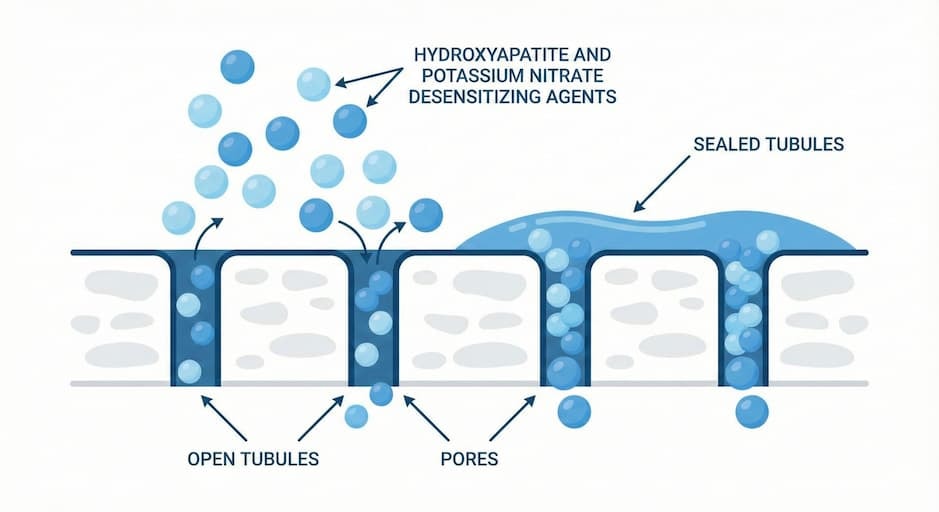
Tooth sensitivity is the number one reason people avoid or discontinue whitening. A strategic whitening stack incorporates desensitizers before, during, and after treatment to ensure a comfortable experience without undermining results.
Why Sensitivity Happens
Peroxide temporarily opens enamel pores to lift stains. This exposure can irritate the tooth nerve or dehydrate enamel, causing zings or prolonged discomfort. Without protection, even mild whitening agents can feel too harsh.
SNOW’s Sensitivity-Focused Formulas
-
The potassium nitrate in the serum actively calms nerves; a 2025 randomized clinical trial demonstrated that 5% potassium nitrate gels significantly reduced tooth sensitivity intensity when applied alongside bleaching agents.
-
Hydroxyapatite rebuilds enamel from the inside, shielding against future irritation.
-
Fluoride-Free Options prevent sensitivity flare-ups without sacrificing strength.
Add desensitizing care as a permanent layer in your stack, not just as a reactive solution.
How Do You Maintain Whitening Results Long-Term?
Whitening doesn’t stop once your teeth are brighter. To make results last and avoid rebound stains, an intense maintenance routine is key. Sticking with one brand ensures consistency across formulas and eliminates product conflicts.
Daily Maintenance
-
Brush with SNOW’s Magic Booster Powder and fluoride-free paste.
-
Floss daily using SNOW’s Whitening Charcoal Floss.
-
Rinse with a fluoride-rich, alcohol-free mouthwash to support pH and hydration.
Weekly Boosts
-
Apply SNOW’s Purple Whitening Strips once or twice weekly to remove early discoloration.
-
Use the Gold Whitening Pen on trouble spots after staining meals.
Lifestyle Adjustments
-
Drink water between dark beverages.
-
Avoid brushing immediately after acidic drinks.
-
Snack on enamel-friendly foods like cheese or leafy greens.
Final Thoughts
Building a complete whitening stack using one brand products like SNOW helps you go beyond short-term cosmetic fixes. It’s a strategic system backed by science, comfort-focused design, and expert-level formulation. From dental professionals to beauty consumers used to curated skincare products, this approach offers predictability, performance, and personalization.
With SNOW’s comprehensive line, you can:
-
Target your whitening goals without trial and error
-
Protect enamel and manage sensitivity in every step
-
Maintain results effortlessly and safely
Ready to build your whitening stack?
Start With SNOW’s Curated Bundles
FAQ
Have questions? We’re happy to help!
Can I mix products from different whitening brands in my stack?
No, you should not mix products from different whitening brands. Mixing brands can lead to unpredictable ingredient interactions, increase sensitivity, or reduce whitening effectiveness, since each brand designs its system to work as a coordinated unit.
How long should I wait between professional treatment and starting at-home maintenance?
You should wait 24 to 48 hours after professional treatment before starting at-home maintenance. This allows your enamel to re-harden and reduces the risk of irritation or sensitivity.
What should I do if I experience sensitivity even with desensitizers?
If you experience sensitivity even with desensitizers, reduce how often you whiten, switch to a lower concentration from the same brand, and apply desensitizers more frequently. If discomfort persists, speak with your dental professional about adjusting your treatment plan.
Are single-brand whitening stacks more expensive than mixing different products?
Single-brand whitening stacks may cost more upfront but usually save money over time. They deliver better results, fewer complications, and reduced need for trial-and-error when mixing incompatible products.
How often should I repeat the complete whitening stack protocol?
You should repeat the full whitening stack every 12 to 18 months. In between, use your at-home products for quarterly touch-ups and maintain daily oral hygiene to keep your results lasting.


